

Grocery list AI is an automated planning system that converts meal plans and recipes into organized, categorized shopping lists without any manual effort. If you spend 20 minutes every Sunday writing out what to buy, you already know the problem this technology solves. The real question is how much further it goes beyond basic convenience. From cutting food costs to supporting nutritional goals, the advantages of grocery list AI extend well past saving a few minutes at the kitchen table. This guide covers how the technology works, what it actually delivers, and how to get the most from it in 2026.
Why use grocery list AI to transform your shopping routine
Grocery list AI, more formally called AI-assisted meal planning and list generation, works by pulling structured ingredient data from unstructured inputs like recipe URLs, typed meal plans, or voice commands. The system then deduplicates, scales, and sorts that data into a ready-to-use shopping list. AI processes weekly meal plans, combines duplicate ingredients, adjusts portions for household size, and categorizes items for efficient shopping, reducing list-making time from 20 minutes to about 10 seconds. That is not a marginal improvement. It eliminates an entire weekly task.
The process follows a defined pipeline:
- Ingredient extraction. The AI reads recipe text or meal plan inputs and identifies every ingredient, including quantities and units.
- Deduplication and scaling. If three recipes all call for garlic, the system combines those quantities into a single line item adjusted for your household size.
- Category sorting. Items are grouped by store section, produce, dairy, proteins, pantry staples, so you move through the store once instead of backtracking. Effective AI pipelines include ingredient extraction, deduplication, and logical sorting for real value.
- Pantry cross-referencing. Advanced tools check your existing inventory before adding items, so you do not buy a third jar of cumin.
- Real-time syncing. Lists update across all household devices the moment a change is made.
Pro Tip: Start by inputting just three to four recipes per week. This gives the AI enough data to learn your preferences without overwhelming the system or your budget.
One nuance worth knowing: aisle-sorting accuracy depends on store-specific templates, not universal logic. Some aisle sorting claims are marketing hype if not backed by actual store layout data. Tools that integrate directly with retailers like Kroger, Walmart, or Whole Foods tend to produce more accurate store-route optimization than generic apps.
What are the real benefits of grocery list AI?
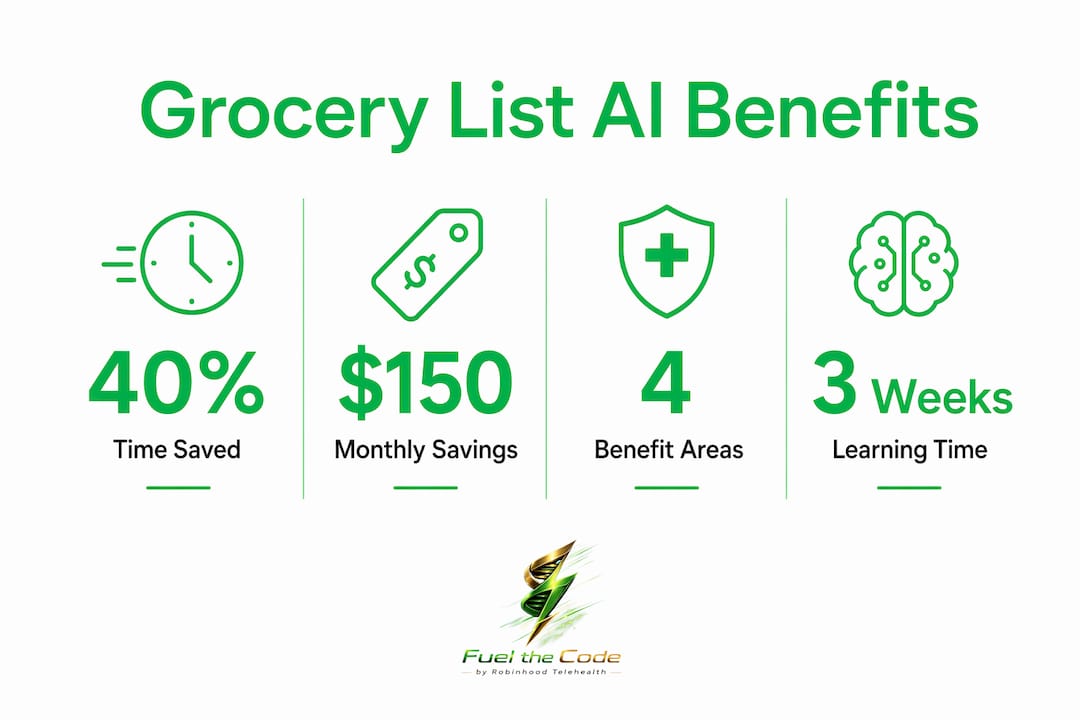
The measurable advantages fall into four categories: time, cost, nutrition, and mental load. Each one compounds the others.
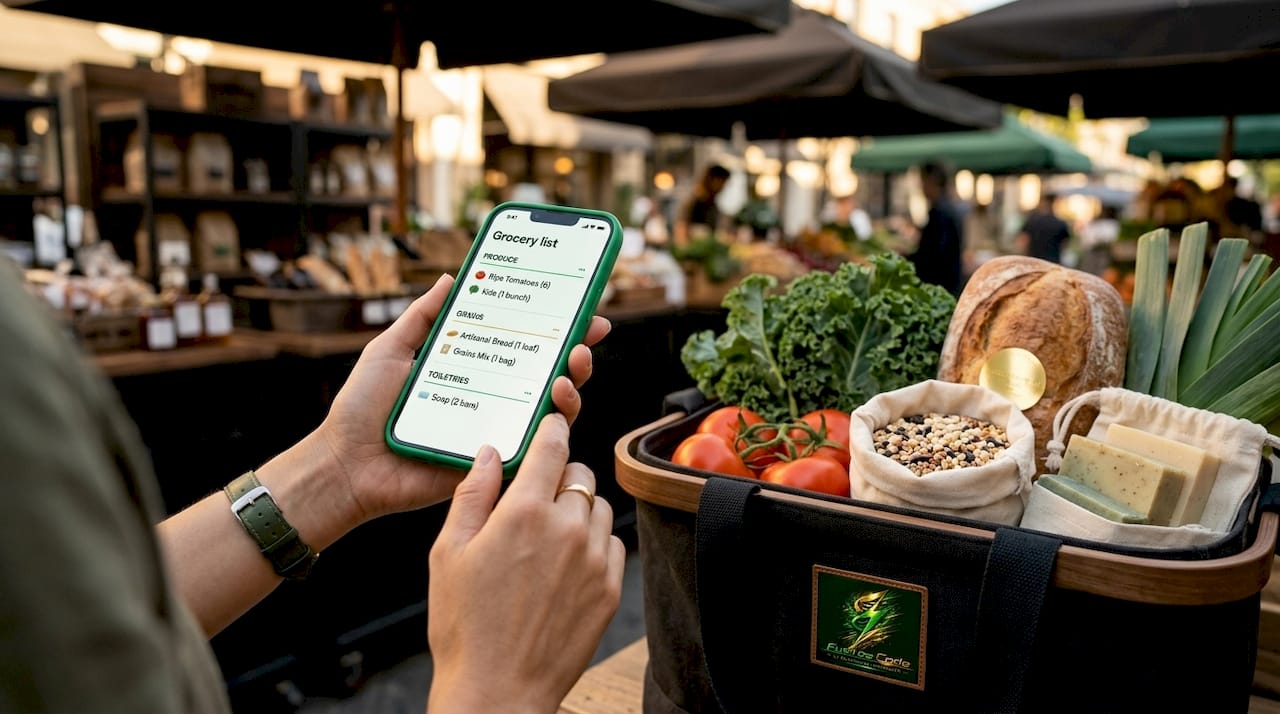
Time savings are immediate and consistent. AI grocery list apps reduce shopping time by up to 40% through smart suggestions, meal planning, and inventory tracking. That figure reflects both the time saved building the list and the time saved in-store from better organization.
Cost reduction follows from smarter planning. An AI-generated weekly grocery plan for a family of four at Kroger produced a shopping list costing about $250 against an AI target of $300, demonstrating real savings through optimized planning. Separately, one user who used Google Gemini to scan fridge photos and plan meals saved approximately $150 per month on groceries through shorter trips, fewer impulse buys, and better use of existing food.
Food waste drops with inventory awareness. Digital nudges through AI-supported apps can reduce household food waste by 21% by providing inventory transparency, expiry notifications, and recipe suggestions based on what you already have. This is the difference between an app that tells you what to buy and one that tells you what to use first.
Nutrition management becomes less effortful. AI meal planning tools improve nutrition awareness by analyzing recipes for nutrients and flagging missing elements, supporting consistent, balanced eating rather than strict dieting. The goal is not a rigid meal plan. It is a system that keeps protein, fiber, and vegetable targets in range without requiring you to track every gram manually.
"Consistency in meal patterns with AI assistance reduces decision fatigue and stabilizes healthy eating habits, highlighting AI's role as an effective planning assistant rather than a rigid diet enforcer." — PlanEat AI, 2026
The cognitive load benefit is the one most people underestimate. Shared grocery lists that learn user habits reduce mental load and duplicate purchases by remembering staple items, roughly 80 to 100 per household, and syncing in real time. Shifting from manual weekly list creation to automatic recurring item suggestions is a meaningful quality-of-life change for anyone managing a busy household.
How do popular AI grocery list tools compare?
Choosing the right tool depends on your priorities. The table below compares the major categories of AI grocery list apps available in 2026 based on their core feature sets.
| Feature | Basic AI list apps | Meal-plan integrated tools | Full pantry tracking tools |
|---|---|---|---|
| Ingredient extraction | Yes | Yes | Yes |
| Meal plan input | Limited | Full | Full |
| Pantry/fridge scanning | No | Limited | Yes (photo or manual) |
| Real-time household sync | Some | Most | Yes |
| Nutrition analysis | No | Yes | Yes |
| Store-specific aisle sorting | Rare | Some | Some |
| Learning from purchase history | No | Limited | Yes |
Tools like Any.do, PlanEat AI, and Google Gemini represent different tiers of this spectrum. Any.do focuses on shared list management and habit learning. PlanEat AI generates full weekly menus with grouped grocery lists and nutritional targets. Google Gemini, as demonstrated in real-world testing, goes further by scanning fridge photos to cross-reference pantry inventory against planned meals. For users focused on individualized meal planning, tools with full nutrition analysis and meal-plan integration deliver the most value.
Pro Tip: If you share grocery duties with a partner or family members, prioritize tools with real-time syncing and collaborative editing. Duplicate purchases are one of the most common and avoidable sources of grocery waste in multi-person households.
The learning curve for most tools is low. Basic list generation requires nothing more than typing a meal name or pasting a recipe link. The more sophisticated features, pantry scanning, nutrition flagging, and purchase cadence tracking, take two to three weeks of consistent use before the AI has enough behavioral data to make accurate suggestions.
Practical tips for integrating AI into your grocery routine
Getting the most from grocery list automation requires a few deliberate habits, especially in the first month.
- Start with your existing meal rotation. Input the five to seven meals your household already eats regularly. This gives the AI an accurate baseline and produces immediately useful lists without requiring you to plan entirely new meals.
- Customize categories to your store layout. Most tools allow you to rename or reorder categories. Spend 10 minutes mapping the app's default categories to your actual store's layout. This one-time setup pays off on every future shopping trip.
- Use pantry tracking from day one. The food waste reduction benefits only activate when the AI knows what you already have. Whether your tool uses manual entry or photo scanning, consistent pantry updates are what separate a smart list from a standard one. AI tools must track inventory and expiration dates to provide recipe suggestions based on actual pantry contents.
- Let the AI suggest, then edit. Treat the AI-generated list as a first draft, not a final answer. Override suggestions that do not fit your week, and the system will learn your preferences faster.
- Sync across all household members. Households adopting a shared grocery list mindset experience fewer duplicate purchases and reduced coordination overhead immediately. Add every adult in the household to the same list from the start.
- Review nutrition flags weekly. If your tool includes nutrition analysis, check the weekly summary before finalizing your list. A single swap, adding spinach to a pasta dish or swapping white rice for quinoa, can close a nutritional gap without changing your meal plan.
For families with children, the grocery list planning process becomes a useful tool for modeling healthy food choices, not just managing logistics. Involving kids in reviewing the AI-generated list builds food literacy alongside shopping efficiency.
Key takeaways
Grocery list AI delivers its strongest returns when paired with consistent pantry tracking, household syncing, and a willingness to let the system learn your preferences over time.
| Point | Details |
|---|---|
| Time savings are immediate | AI reduces list-making from 20 minutes to seconds by automating ingredient extraction and sorting. |
| Cost reduction is measurable | Optimized planning and pantry cross-referencing can save households $150 or more per month. |
| Nutrition consistency improves | AI flags nutrient gaps in weekly menus, supporting balanced eating without manual tracking. |
| Food waste drops with inventory tracking | Apps with expiry notifications and pantry scanning reduce household food waste by up to 21%. |
| Shared lists reduce coordination overhead | Real-time syncing across household members eliminates duplicate purchases and missed items. |
The part most people skip when they start using AI grocery tools
Most people set up a grocery list AI app, generate one list, and then revert to their old habits within two weeks. The reason is almost always the same: they skipped pantry tracking. Without inventory data, the AI is just a faster version of what you were already doing manually. It generates a list, but it cannot tell you that you already have two pounds of chicken in the freezer or that the olive oil expires next week.
The tools that genuinely change behavior are the ones that close the loop between what you plan, what you buy, and what you actually use. Google Gemini's fridge-scanning feature is a good example of this done well. It is not elegant, but it works because it forces the AI to engage with your real pantry rather than an idealized version of it.
The other thing I have noticed is that nutrition consistency improves not because the AI enforces a diet, but because it removes the friction of thinking about balance. When the system flags that your week is low on fiber or that you have had the same protein source four nights in a row, you make a small adjustment. Over months, those small adjustments add up to a meaningfully better eating pattern. That is the real value of AI for grocery planning. Not perfection. Consistency with less effort.
— G
How Robinhoodtelehealth takes AI grocery planning further
Robinhoodtelehealth combines AI-driven meal planning with genetic testing and clinical science to build nutrition strategies that go beyond a standard shopping list. If you are already using AI to organize your groceries, the logical next step is grounding those food choices in your actual biology. The platform's meal planning app generates personalized grocery lists aligned with your health goals, dietary needs, and performance targets. For users who want the full picture, the precision wellness shop offers DNA-based nutrition profiles, supplement stacks, and clinician-guided protocols that make every item on your grocery list work harder for your body.
FAQ
What does grocery list AI actually do?
Grocery list AI extracts ingredients from meal plans or recipes, removes duplicates, scales quantities for household size, and sorts items by store category. The result is a ready-to-use shopping list generated in seconds rather than minutes.
How much money can AI grocery tools save?
Real-world testing shows savings ranging from roughly $50 per week on a family grocery run to $150 per month for individuals using pantry-scanning tools like Google Gemini. Savings come from fewer impulse purchases, better use of existing food, and optimized meal planning.
Do AI grocery apps work for families with different dietary needs?
Yes. Most meal-plan integrated tools allow per-person dietary filters, including allergies, intolerances, and nutritional targets. The AI adjusts recipe suggestions and grocery quantities accordingly, making them practical for households with mixed dietary requirements.
How long does it take for the AI to learn your preferences?
Most tools require two to three weeks of consistent use before purchase cadence and preference data are strong enough to generate highly accurate automatic suggestions. Starting with your existing meal rotation speeds up this learning period.
Is grocery list AI useful without meal planning?
It is less powerful but still useful. Even without a formal meal plan, AI tools that track pantry inventory and purchase history can suggest recurring staples, flag low-stock items, and reduce duplicate purchases through real-time household syncing.