
Grocery shopping with kids can feel like a test of patience — until you realize the cart chaos often comes from one missing step: a list made with them, not just for them. Learning how to create child grocery lists that actually work takes about ten minutes of preparation, but pays off in calmer trips, better nutrition, and kids who genuinely understand what they eat. This guide walks you through exactly how to do it, from the tools you need to the specific steps, common mistakes, and the real benefits you can expect once the system clicks.
Table of Contents
- Key takeaways
- How to create child grocery lists: what you need first
- Step-by-step process for creating a child grocery list
- Common challenges and how to fix them
- What you and your kids actually gain from this
- My honest take on shopping with kids
- Take family nutrition further with Robinhoodtelehealth
- FAQ
Key takeaways
| Point | Details |
|---|---|
| Start with a pantry check | Walk through the fridge and cupboards with your child before writing a single item on the list. |
| Match the list to the store layout | Organize sections by produce, protein, grains, and dairy to move faster and reduce impulse buys. |
| Use pictures for young children | Visual cues help toddlers and preschoolers connect food names to real items and food groups. |
| Apply a minimum-choice rule | Let kids choose at least three items per food category to balance their autonomy with nutrition goals. |
| Give kids a budget role | Assigning a small portion of the grocery budget to children builds financial literacy and cuts off-list requests. |
How to create child grocery lists: what you need first
Before you write the first item, you need the right setup. Jumping straight to list-making without preparation is why most attempts fizzle out after one or two trips.
Materials to gather
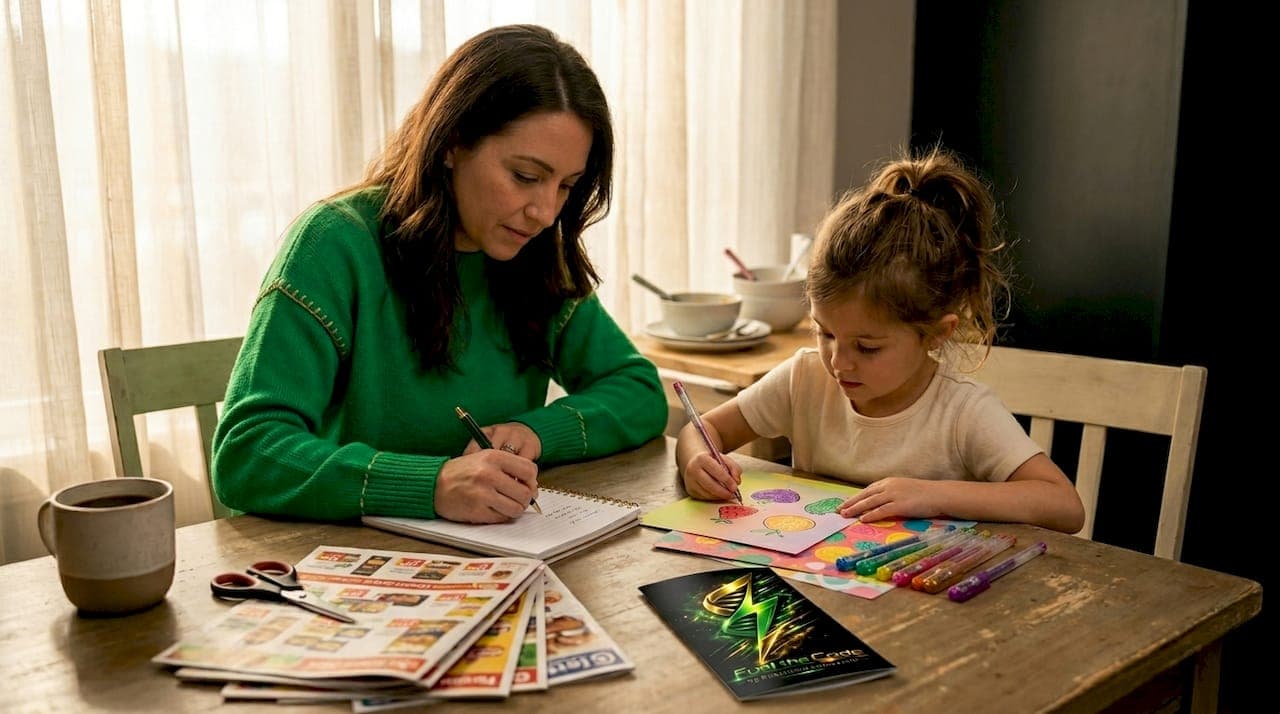
You have two main paths: paper or digital. For younger children, paper wins because it lets you stick pictures, draw items, or attach cut-outs from store flyers. A sheet of construction paper, a marker, and a glue stick are all you need. For older kids, a shared notes app on your phone or one of the best grocery list apps designed for families works well. The goal is a format your child can interact with, not just a list you hand them.
Store flyers are underrated tools. Picture-based grocery lists made with cut-outs from flyers take about 10 minutes and teach kids food categories and basic planning at the same time. Print a few pages or pull up the digital version on a tablet so your child can point to and select items.
Age-appropriate approaches at a glance
| Age range | Best list format | Child's role |
|---|---|---|
| 2 to 4 years | Picture-only list | Point to and name items |
| 5 to 7 years | Pictures with printed words | Help cut out images, match names |
| 8 to 11 years | Written list by category | Write items, check off as you shop |
| 12 and up | App-based list | Build the list independently, manage a small budget |
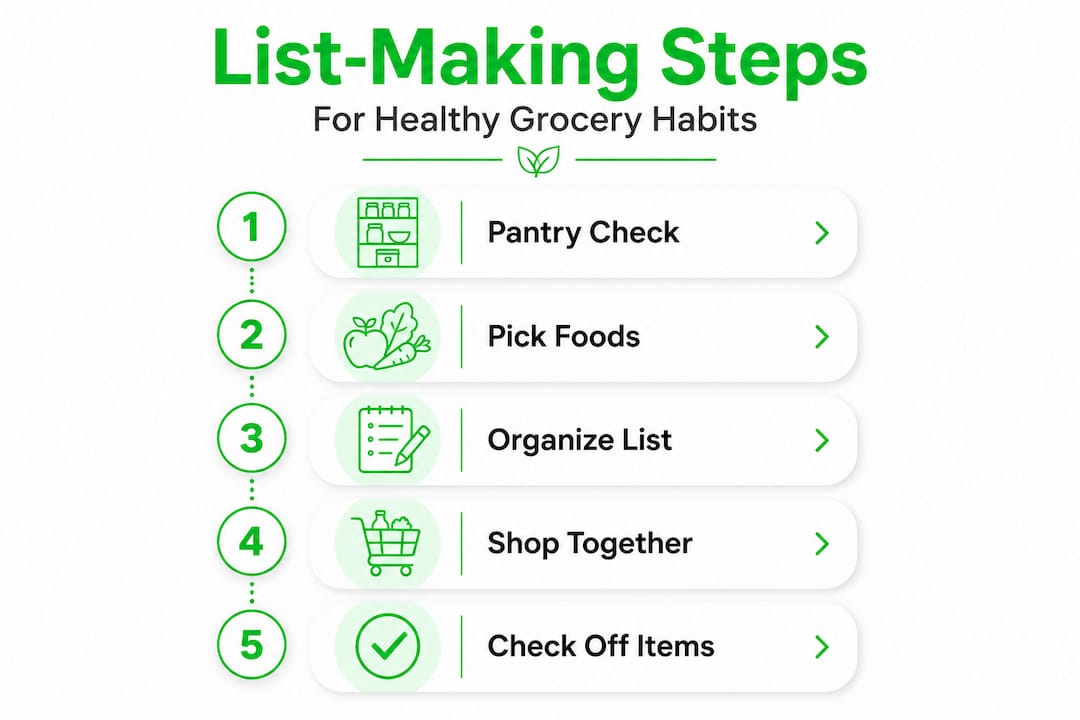
The pantry check comes before any of this. Open the fridge and cupboards with your child and walk through what's already there. This pre-shopping inventory teaches kids the difference between "we need this" and "we already have this," which reduces waste and keeps the list honest.
Step-by-step process for creating a child grocery list
Once your materials are ready and the pantry check is done, the actual list creation is straightforward. Here's the process that works.
-
Write down what ran out or is low. After your pantry check, you and your child list the gaps together. Ask questions like "We're out of eggs. What do we make with eggs?" It connects the item to a meal, which builds food awareness rather than just running through a checklist.
-
Organize by store section. Grouping items by section like produce, grains, proteins, and dairy keeps shopping fast and focused on nutritious foods. Teach your child these categories as you write. Most stores follow a predictable layout, so this habit sticks quickly.
-
Add pictures or icons for toddlers. If you are creating grocery lists for toddlers, skip relying on written words. Cut fruit pictures from a flyer and tape them next to "apples" or "bananas." When your toddler spots the apple in the store, they feel the connection between the list and the real world.
-
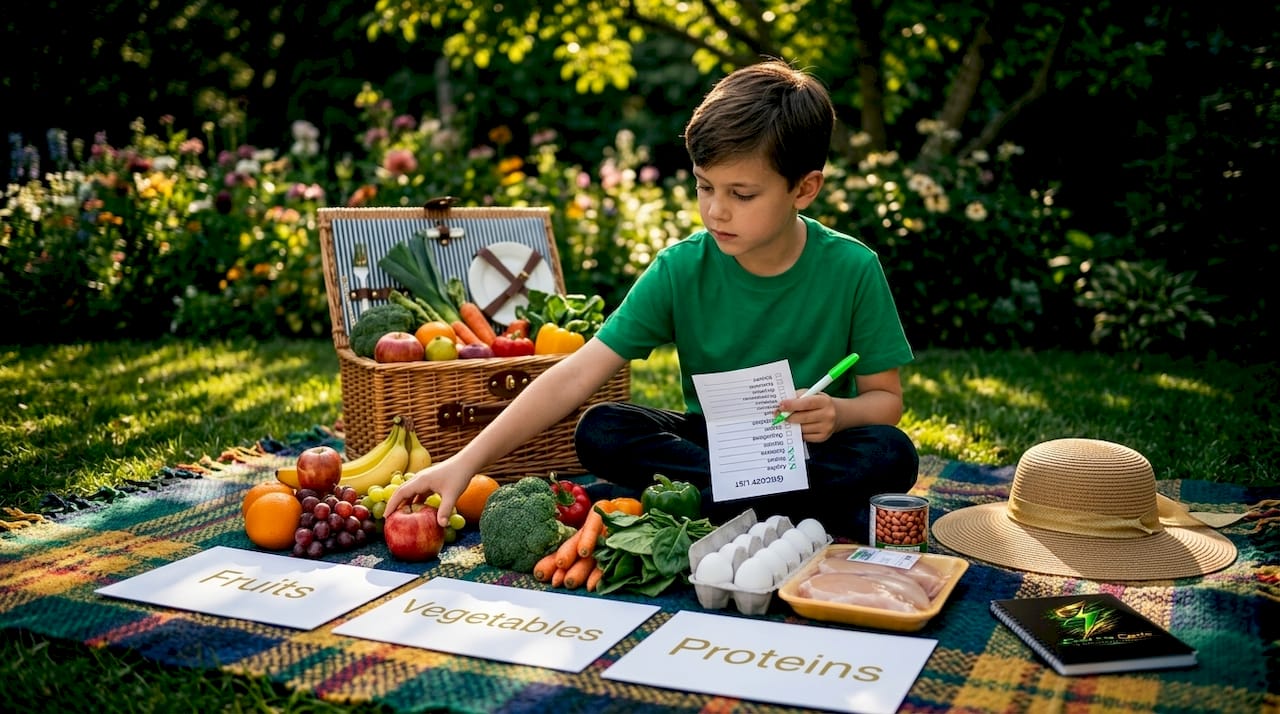
Apply the minimum-choice rule. This is one of the most practical child-friendly grocery list tips you can use. Minimum-choice rules require kids to select at least three items per food category, which gives them real choice while keeping the cart from filling up with processed snacks. Tell your child: "You pick three fruits, three vegetables, and two proteins."
-
Set clear boundaries before you walk in the store. Decide in advance what is on the list and what is not. Healthy examples to include are Greek yogurt, whole grain bread, eggs, seasonal fruit, spinach, carrots, hummus, chicken thighs, canned beans, and brown rice. These items give kids enough variety to feel ownership without opening the door to every cereal with a cartoon character on the box.
-
Review the list together before leaving. Spend two minutes going over it. Point to each item, ask your child to name it, and confirm the store sections. This final review also checks whether you have organized the list to match the store layout, which lets children shop with more independence while you stay close.
Pro Tip: If your child is six or older, let them hold the list and check off items as you find them. The physical act of checking off a box creates a sense of responsibility and keeps them engaged through the whole trip.
Common challenges and how to fix them
Even the best list does not prevent every obstacle. Here is what tends to go wrong and how to handle it without losing your mind.
The impulse request problem. Kids will see things not on the list and want them. The fix is not saying no every time. It is redirecting: "That is not on our list today. Want to add it to next week's list?" A small notebook for "next week's list" gives the request a home without derailing the budget. Teaching kids to shop with a list and a small allowance is one of the most effective ways to cut off-list requests because they feel the tradeoff directly.
Decision fatigue. Too many choices overwhelm children, and you end up making every call anyway. Limit decisions to one per category. "You pick one cereal from this shelf" is specific. "Pick a breakfast food" is too open and leads to twenty minutes in the wrong aisle.
Keeping young kids engaged. Boredom hits fast, especially with toddlers. Give them a job. Younger children can carry the hand basket, place items in the cart, or match the picture on the list to the product on the shelf. Turning shopping into an educational activity keeps children focused and genuinely makes the trip more productive.
Staying on budget. Premium grocery stores can cost 20 to 40 percent more than standard supermarkets, which means an unstructured trip with kids can blow a weekly food budget fast. A list with pre-decided quantities keeps spending predictable. For families with multiple children, structured list-making is not optional. It is how 20 percent of U.S. households with three or more children under 18 keep grocery costs manageable.
"The list is not about control. It is about giving children a framework that makes the store make sense."
Safety with young list-holders. Keep children close. If an older child is holding the list and moving ahead to check items, establish clear boundaries like "stay in the same aisle" before you enter the store.
What you and your kids actually gain from this
The payoff from involving kids in grocery shopping goes well beyond a calmer cart.
Children who participate in list-making build a working knowledge of food groups, understand where meals come from, and begin to see nutrition as something they participate in rather than something that happens to them. That shift in perspective is hard to create through conversation alone, but it comes naturally through repeated, hands-on list-making and shopping.
For parents, the family meal planning aspect pays off in time saved during the week. When your child helped build the list, they are less likely to complain about dinner because they chose something on the menu. That alone is worth the ten minutes of preparation.
Financially, a consistent list habit keeps spending tight. Kids who shop with a portion of the budget learn to compare prices, make tradeoffs, and feel the weight of financial choices early. That is financial literacy in the most practical form possible, delivered one shopping trip at a time.
Long-term, children who grow up involved in grocery planning tend to make more deliberate food choices as they get older. The list becomes a mental model they carry into their own cooking and shopping habits years down the road. The interactive grocery list for children is not just a shopping tool. It is a nutrition education tool with compounding returns.
My honest take on shopping with kids
I have seen parents treat grocery shopping with kids as something to survive rather than something to use. That mindset is the actual problem.
In my experience, the list is not what changes the trip. The conversation before the trip is what changes it. When a child has already decided they are picking the apples, the carrots, and one surprise fruit, they walk into the store with a mission. They are not looking for stimulation because the list is already providing it.
What I have learned from watching this play out is that the balance between child choice and nutritional control does not require much precision. The minimum-choice framework handles most of it automatically. What does require attention is keeping the categories broad enough that kids feel genuine ownership. "Pick any three vegetables" works better than "pick from these three vegetables."
The stress reduction is real, but it does not come from the list itself. It comes from the fact that both you and your child know the rules before you walk in. Unpredictability is what makes grocery shopping with kids hard. Structure removes that unpredictability without removing the fun.
The process does evolve. What works for a five-year-old does not work for a nine-year-old. Stay open to updating the format, the categories, and the child's level of responsibility as they grow.
— G
Take family nutrition further with Robinhoodtelehealth
Creating smart grocery lists is a powerful start. But if you want to know precisely what your child's body needs rather than following general nutrition guidelines, there is a more targeted path available.

Robinhoodtelehealth combines DNA-based nutrition profiles with AI-driven meal planning so your family's food choices are grounded in actual biology rather than best guesses. Their meal planning platform connects genetic data to personalized grocery lists, removing the guesswork from what to buy and cook each week. Whether you are managing a household of three or seven, precision nutrition tools make the grocery list not just organized but genuinely optimized. Explore the platform and book a free consultation to see what a science-backed approach to family nutrition looks like in practice.
FAQ
What age can children start helping with grocery lists?
Children as young as two can participate using picture-based lists, pointing to images of items they recognize. By age five or six, most kids can help write items, organize by category, and check off purchases in the store.
How do I stop my child from requesting off-list items?
Set expectations before entering the store, give your child a defined role on the list, and use a "next week's list" notebook for items they want but are not buying today. Giving children a small portion of the shopping budget also reduces conflict because they feel the tradeoff themselves.
What are the best grocery list apps for families?
Shared apps that allow multiple users to add, edit, and check off items work best for families with older children. Look for apps that support categories, images, and real-time syncing so every family member works from the same list during the trip.
How do I create a grocery list for a toddler?
Use a picture-based format with images cut from store flyers or printed from online. Organize pictures into simple groups like fruits, vegetables, and snacks. Let your toddler hold the list and match pictures to items in the store to keep them engaged and learning.
Does a structured grocery list actually save money?
Yes. Shopping with a pre-planned list reduces impulse purchases significantly. Since premium stores already cost up to 40 percent more than standard supermarkets, an unstructured trip with children can quickly overspend a weekly budget. A list with set quantities per category keeps totals predictable.