
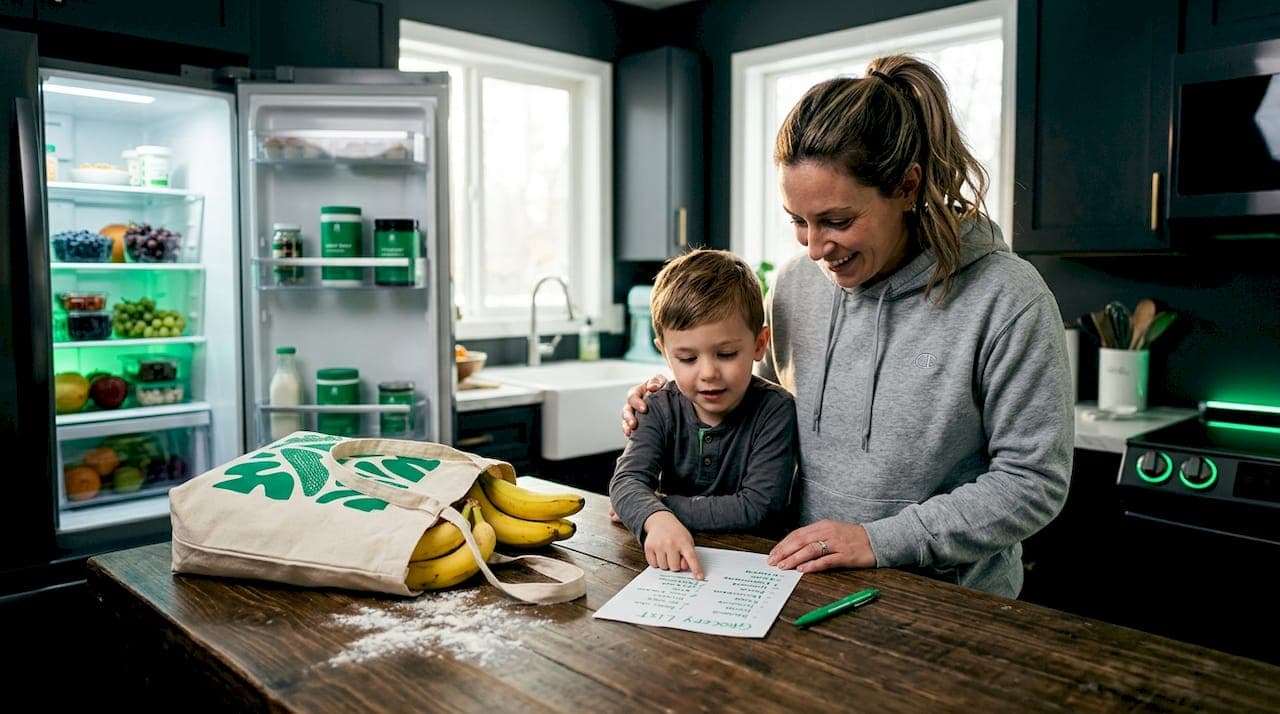
A single piece of paper, or a well-organized app, can quietly reshape how your family eats. Most people assume grocery shopping is just a chore, but people who shop with a list consistently make healthier food choices and report less stress at the store. The problem for most busy parents is not a lack of nutrition knowledge. It is the gap between knowing what to buy and actually buying it, week after week, without burning out. Grocery list planners close that gap with structure, science, and surprising efficiency.
Table of Contents
- The science behind grocery list planners
- Why planners reduce stress and improve shopping efficiency
- Health gains from planning: Beyond the shopping list
- Common pitfalls and advanced planner strategies
- Who benefits most from grocery list planners?
- Why planners alone aren't enough: Real-life lessons for families
- Explore healthy solutions for your family
- Frequently asked questions
Key Takeaways
| Point | Details |
|---|---|
| Healthier shopping habits | Using planners encourages nutritious choices and reduces impulse buying. |
| Time and stress savings | Planners streamline shopping and meal preparation, saving you valuable time. |
| Measurable health improvements | Structured planning can lead to better blood pressure and cholesterol outcomes. |
| Waste reduction tips | Strategies like checking your pantry first help avoid extra purchases and food waste. |
| Personalized benefits | Grocery list planners work best when tailored to your family's needs and routines. |
The science behind grocery list planners
Building on the introduction, let's dig into what the research actually says about grocery list planners and their real impact on nutrition and health.
Grocery list planners work because they shift your decision-making from reactive to intentional. When you walk into a store without a plan, you are making dozens of micro-decisions under time pressure, surrounded by marketing designed to steer you toward processed, high-margin products. A planner removes most of those decisions before you even walk through the door.
Research shows that shoppers who use grocery lists tend to have healthier overall diets and make more deliberate food choices. This is not a small effect. It shows up consistently across demographics, household sizes, and income levels. The list acts as a commitment device, keeping your future self accountable to the choices your present self made at home, calmly, without the distraction of store displays or hungry children.
One of the most compelling recent findings comes from a study involving Instacart, the popular grocery delivery platform. Researchers found that preloading carts with healthy recipes led families to make grocery purchases that were significantly more nutritious than their baseline habits. The key insight: when healthy options were built into the shopping framework by default, families followed through. This is what a well-designed grocery list planner does. It builds the healthy default into your routine.
| Metric | Without a planner | With a planner |
|---|---|---|
| Impulse purchases | High frequency | Significantly reduced |
| Nutritional quality of cart | Lower, more processed | Higher, more whole foods |
| Weekly food spend | Often over budget | More consistent, lower |
| Meal variety | Repetitive or chaotic | Intentional and balanced |
| Stress at checkout | Common | Rare |
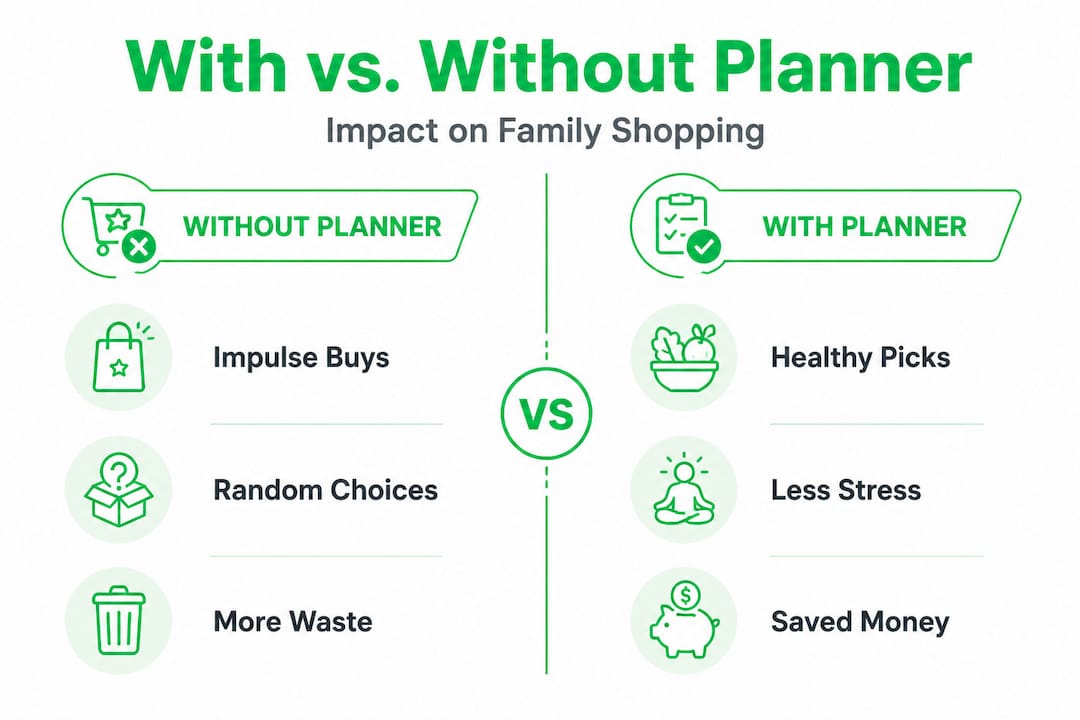
The data paints a clear picture. Planning is not just about convenience. It is a genuine nutritional intervention that produces measurable results without requiring willpower at the store.
Why planners reduce stress and improve shopping efficiency
With the science established, let's see how planners actually work in practice for busy families navigating packed schedules.
The daily "what's for dinner?" question is one of the most quietly exhausting parts of parenting. Decision fatigue is real. By the time 5 PM rolls around, most parents have already made hundreds of small decisions throughout the day. Adding meal choices on top of that is a recipe for defaulting to takeout or processed convenience foods.

Weekly meal planners automatically build grocery lists, which eliminates the daily scramble and reduces the cognitive load that leads to poor food choices. When you sit down once a week to map out meals, you front-load the mental effort at a time when you are calm and focused. The rest of the week runs on autopilot.
Here is what that looks like in practice for a family of four:
- Batch planning sessions: Spend 20 to 30 minutes on Sunday selecting five to seven dinners, two to three lunches, and breakfast staples.
- Consolidated ingredient lists: The planner merges all recipe ingredients into one organized list, eliminating duplicates and reducing trips.
- Category organization: Good planners sort items by store section (produce, dairy, proteins) so you move through the store in one efficient pass.
- Flexible swaps: Build in one or two "flex nights" for leftovers or simple meals to reduce pressure when schedules shift.
- Budget tracking: Many digital planners flag estimated costs so you can adjust before you shop, not after.
"Making a grocery list before shopping helps save time and money and keeps focus on healthy eating." — University of Tennessee Extension
Pro Tip: Keep a running "pantry inventory" note on your phone. Before your weekly planning session, check what proteins, grains, and canned goods you already have. This prevents buying duplicates and gives you a head start on building meals from what's already on hand.
The efficiency gains compound over time. Families who plan consistently report not just less stress during the week, but also a stronger sense of control over their food environment. That sense of control is itself a health asset.
Health gains from planning: Beyond the shopping list
Efficiency makes shopping easier, but intentional planning also has built-in health rewards that go well beyond saving time.
When your grocery list is built around a specific dietary framework, the health benefits become clinical. One of the strongest examples is the DASH (Dietary Approaches to Stop Hypertension) diet, which emphasizes fruits, vegetables, whole grains, lean proteins, and low-sodium options. When families build their grocery lists around this pattern, the results are measurable.
Planning-based grocery shopping improves health outcomes beyond what self-directed approaches achieve. Structured grocery interventions tied to dietary patterns like DASH have shown improvements in blood pressure and cholesterol in participating households. These are not marginal gains. They are the kind of numbers that matter to a cardiologist.
Here is a practical framework for building a health-focused grocery list:
- Start with vegetables and fruits. Fill at least 40 percent of your list with produce. Prioritize variety across colors, which signals a range of micronutrients.
- Choose whole grains over refined. Swap white rice for brown, white bread for whole grain, and regular pasta for legume-based versions.
- Plan your proteins intentionally. Include fatty fish twice a week, lean poultry, legumes, and limit red meat to once or twice weekly.
- Add calcium-rich foods. Low-fat dairy, fortified plant milks, and leafy greens like kale and bok choy cover this category well.
- Limit the processed aisle. If it is not on your list, you are far less likely to buy it. The list itself is your filter.
| Dietary approach | Key grocery list focus | Potential health benefit |
|---|---|---|
| DASH | Low sodium, high potassium produce | Lower blood pressure |
| Mediterranean | Olive oil, fish, legumes, vegetables | Reduced cardiovascular risk |
| Anti-inflammatory | Colorful produce, omega-3 sources | Reduced systemic inflammation |
| Balanced family | Whole grains, lean protein, dairy | Stable energy, healthy growth |
The most important factor is adherence. A beautifully designed list that you abandon by Wednesday delivers zero health benefit. This is why habit formation matters as much as the list itself. Start small, keep the planner simple, and build consistency before adding complexity.
Common pitfalls and advanced planner strategies
As you put planners to work, avoiding these common mistakes can make the difference between a system that sticks and one that falls apart by week three.
The most common mistake is building a list from scratch every week without checking what you already have. This leads to duplicate purchases, food waste, and a pantry full of half-used ingredients that never get incorporated into meals. The fix is straightforward: shop your pantry first before you build your list. Check your fridge, freezer, and dry goods, then plan meals around what needs to be used.
Other common pitfalls and how to avoid them:
- Over-planning for the week: Scheduling seven elaborate dinners is a setup for failure. Aim for five planned meals and leave room for leftovers and simple nights.
- Ignoring kids' preferences: A list full of foods your children refuse to eat creates waste and mealtime battles. Involve kids in choosing one or two meals per week to build buy-in.
- Not adjusting for schedule changes: Sports practices, late meetings, and school events disrupt meal plans. Flag two or three "quick meals" (under 20 minutes) on your list every week as backup options.
- Skipping seasonal produce: Buying what is in season is cheaper, fresher, and more nutritious. Check what is on sale before finalizing your list and let that guide some choices.
- Using a planner that doesn't fit your lifestyle: A complicated app with too many features will get abandoned. A simple notes app or a printed template works just as well if you actually use it consistently.
Pro Tip: Rotate your meal plan on a four-week cycle. Build four weeks of varied, family-approved menus and then repeat them. This cuts planning time dramatically after the first month and ensures nutritional variety without reinventing the wheel every Sunday.
Advanced planners also use their lists to track nutrition goals over time. If you are working toward more fiber, more omega-3s, or less added sugar, your grocery list is the most direct lever you have. Every item on that list is a vote for or against your health goals.
Who benefits most from grocery list planners?
Now that we have covered strategies, let's look at who gains the most and what is needed to maximize the benefits for different households.
Grocery list planners deliver the strongest results for busy parents managing multiple schedules, health-conscious families working toward specific nutrition goals, and households where food budgets require careful management. These groups share a common need: structure that reduces the mental load of feeding people well, consistently, without spending every evening stressed about dinner.
Key groups who benefit most:
- Parents of school-age children who need to coordinate lunches, after-school snacks, and dinners across varying schedules
- Families managing chronic conditions like hypertension, diabetes, or high cholesterol who need to align grocery choices with medical dietary guidance
- Health-focused individuals tracking macronutrients, managing weight, or following specific dietary frameworks like Mediterranean or anti-inflammatory eating
- Budget-conscious households who need to minimize waste and stretch food dollars without sacrificing nutrition
However, planners are not a universal fix. Not all households will use lists consistently, and research shows that interventions combining recipes, price incentives, and food literacy support planning behaviors far more effectively than lists alone. For households facing food insecurity, limited cooking time, or low familiarity with certain ingredients, a grocery list without accompanying support can feel overwhelming rather than helpful.
The solution is to pair your planner with resources that address those barriers directly. Recipe cards tied to your list, budget-friendly ingredient swaps, and simple cooking techniques make the planner more actionable for a wider range of families. The goal is a tool that fits your real life, not an idealized version of it.
Why planners alone aren't enough: Real-life lessons for families
Here is where most articles stop. But if you want lasting results, the grocery list is just the starting point.
We have seen families build beautifully organized planners, stock their kitchens with nutritious ingredients, and still struggle to maintain those habits three months later. The list did not fail them. The habit infrastructure around the list did. A planner is only as powerful as the routine that supports it.
Planning-based grocery interventions can improve diet quality and some clinical outcomes, but effects may not persist after the structured intervention ends. This is the uncomfortable truth that most wellness content skips over. When the external structure goes away, so do many of the gains.
What this means for your family is that the planner needs to become a genuine habit, not a temporary project. That requires flexibility. A rigid plan that cannot absorb a sick child, a work deadline, or a spontaneous family dinner out will eventually get abandoned. The families who sustain the benefits are the ones who treat the planner as a living tool, updated weekly, adapted to real life, and connected to a broader health vision rather than just a shopping checklist.
The deeper opportunity is to connect your grocery planning to a personalized understanding of your family's actual nutritional needs. Knowing that your child needs more iron, or that you personally respond better to higher protein breakfasts, changes what goes on the list in ways that generic templates cannot capture. That level of personalization is where the real long-term gains live.
Explore healthy solutions for your family
If the research has you thinking about what a more structured, personalized approach to family nutrition could look like, you are not alone.

Robinhood Telehealth offers health and wellness solutions that go beyond standard grocery lists. From AI-driven meal planning built around your genetic profile to personalized supplement stacks and clinician-guided nutrition protocols, the platform is designed for families and individuals who want science-backed tools rather than generic advice. Whether you are looking to improve metabolic health, support your children's nutrition, or build a sustainable family wellness routine, the resources available through Robinhood Telehealth are built to match your real biology and your real life. Explore what precision wellness looks like when it is tailored specifically to you.
Frequently asked questions
How do grocery list planners support healthy eating?
Planners help you stick to nutritious meal plans by organizing your shopping around intentional choices and limiting impulse purchases at the store. People who shop with a grocery list consistently show healthier dietary patterns than those who shop without one.
What is the best way for busy parents to use grocery list planners?
Batch plan meals for the week, organize recipes by day, and let the planner generate a consolidated shopping list to save time and reduce decision fatigue. Weekly meal planners that auto-generate lists from selected recipes are especially effective for time-pressed households.
Can grocery list planning improve measurable health outcomes?
Yes, structured planning tied to dietary frameworks can help improve blood pressure and cholesterol levels. Planning-based grocery shopping consistently outperforms self-directed approaches when it comes to clinical health markers.
How can planners help minimize food waste?
By checking your pantry, fridge, and freezer before building your list, you avoid buying duplicates and reduce spoilage. Meal planning that starts at home is one of the most effective strategies for cutting household food waste.
Are there limitations to using grocery list planners?
Some households face real barriers to consistent planner use, including time constraints and limited food literacy. Combining recipes, price incentives, and food literacy with list-based planning produces significantly better outcomes than lists alone.