
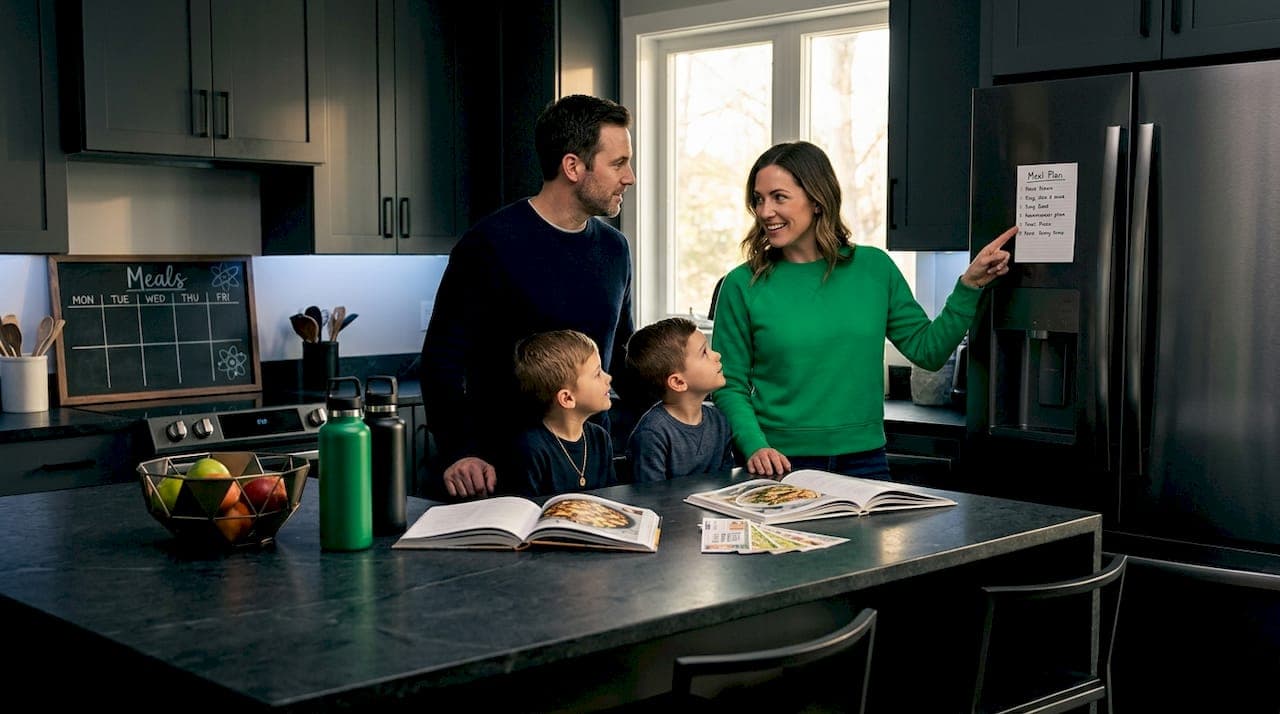
Getting a nutritious dinner on the table every night while managing work, school pickups, and after-school activities is genuinely hard. Most parents don't struggle because they lack motivation. They struggle because there's no system in place. A clear, repeatable meal planning process changes that. It cuts down the daily "what's for dinner?" panic, keeps your grocery cart honest, and turns ordinary mealtimes into something your kids actually look forward to. This guide walks you through every step, from gathering your tools to spotting the signs that your plan is really working.
Table of Contents
- What you need to start family meal planning
- A proven step-by-step process for family meal planning
- Turning meal planning into a teachable moment
- Overcoming common meal planning challenges
- How to tell your meal plan is working—and what to expect
- What most meal planning guides miss—and what actually works
- Connect with expert support for healthy family living
- Frequently asked questions
Key Takeaways
| Point | Details |
|---|---|
| Plan ahead, save stress | Meal planning transforms dinnertime chaos into calm with less last-minute scrambling. |
| Turn planning into learning | Involving kids in meal choices and prep builds real-life nutrition skills. |
| Flexibility is key | Modular meals and flexible routines keep planning realistic for busy families. |
| Family meals foster connection | Shared meals boost family bonds and healthy habits, even more than perfect menus. |
What you need to start family meal planning
With the challenges clear, let's look at how you can get organized for meal planning success. The good news is that you don't need fancy apps or a culinary degree. You need a handful of simple tools and a willingness to involve your whole household from the start.
Your core toolkit:
- A weekly calendar (paper or digital) showing school days, sports, and late nights
- A running recipe collection, whether that's a binder, a saved folder online, or a few trusted cookbooks
- A structured grocery list organized by store section (produce, proteins, pantry staples)
- A visible meal plan posted somewhere the whole family can see it, like the refrigerator
That last point matters more than most parents expect. When kids can see what's planned for Tuesday, they feel included. They stop asking "what are we having?" and start asking "can I help?" That small shift builds real nutrition awareness over time.
Planning meals at home and using a grocery list are CDC-recommended strategies for choosing healthier options and avoiding less healthy drive-thru purchases. The list is your defense against impulse buying. Without it, a quick stop for "just a few things" turns into a cart full of processed snacks and forgotten vegetables.
| Tool | Why it matters |
|---|---|
| Weekly calendar | Matches meals to your actual schedule |
| Recipe collection | Reduces decision fatigue on busy nights |
| Organized grocery list | Saves time and prevents unhealthy impulse purchases |
| Posted meal plan | Builds family buy-in and nutrition awareness |
Pro Tip: Assign one day each week as your "planning day." Even 20 minutes on Sunday morning to review the week ahead and write your list will save you hours of stress by Thursday.
Involve your kids in this setup phase. Let them flip through recipes and flag meals that sound good. Even young children can help organize the grocery list by category. These small tasks build the habit of thinking about food intentionally, which is one of the most valuable nutrition skills you can give them.
A proven step-by-step process for family meal planning
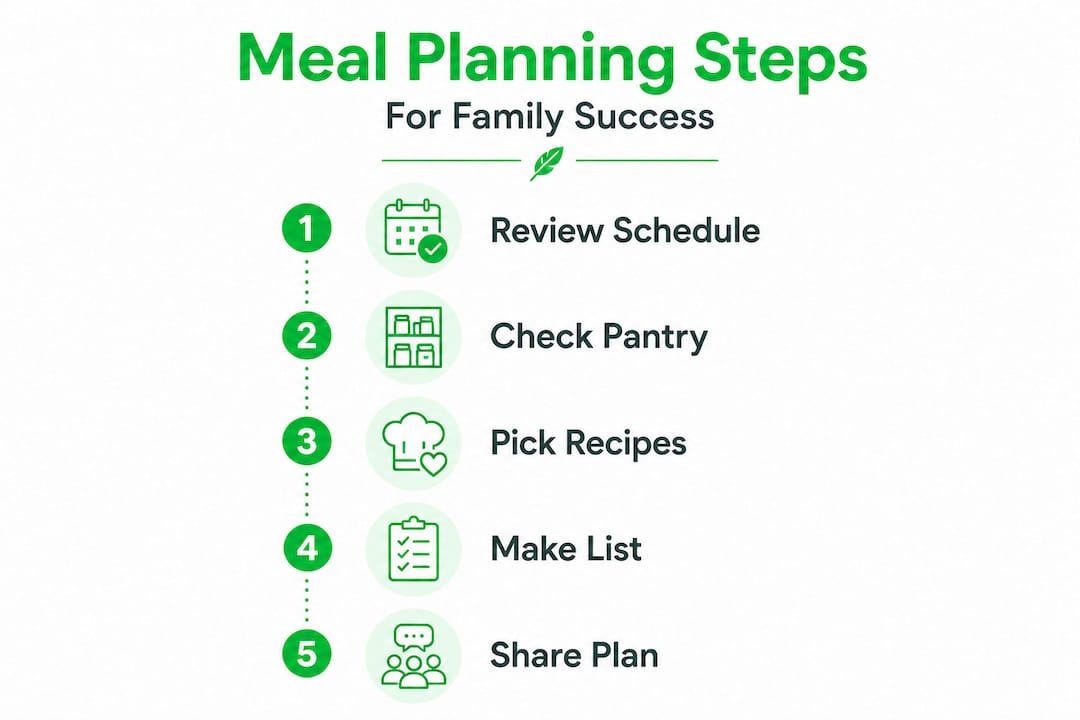
Once you have your tools ready, you can move right into a practical process that works for real families. The following five steps are grounded in real-world family nutrition research and are designed to be repeatable every single week without burning you out.
Step 1: Review your weekly schedule. Before you pick a single recipe, look at the week ahead. Which nights are packed? Which evenings do you have a full hour to cook? Matching meal complexity to your actual schedule is the single most important step most guides skip entirely.
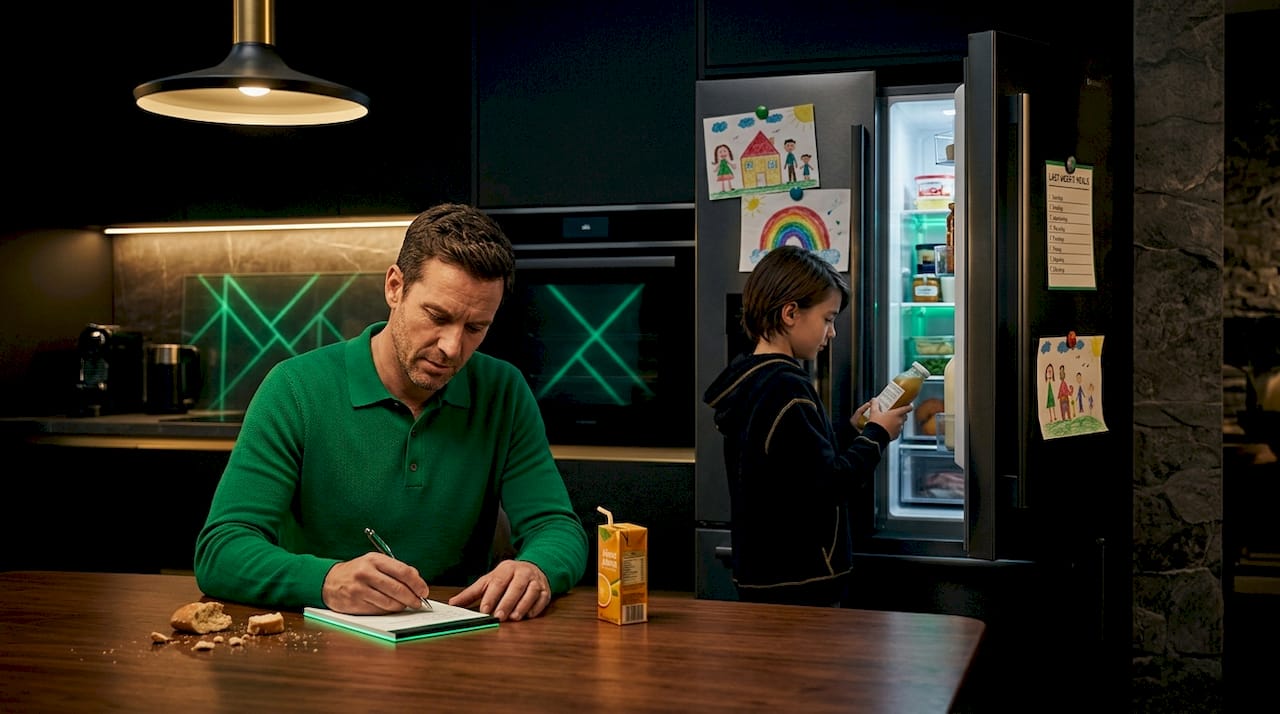
Step 2: Take a quick inventory. Open the fridge, freezer, and pantry. Note what needs to be used before it goes bad. This habit alone can cut your grocery bill significantly and reduces food waste.
Step 3: Select your meals. Choose recipes that fit each night's time window. Aim for two or three "anchor" meals that generate useful leftovers. A roast chicken on Sunday becomes chicken tacos on Monday and chicken soup by Wednesday. This modular thinking is a game changer for busy families.
Step 4: Build your shopping list. Write it by store section so you move efficiently. Cross-reference your inventory so you don't double-buy. Keep a "staples" section at the bottom for things like olive oil, canned tomatoes, and pasta that you replenish regularly.
Step 5: Post and share the plan. Print it out or write it on a whiteboard. Share it in a family group chat if your kids are older. Meal planning for busy families consistently reduces stress and saves time and money when paired with this kind of practical household-wide workflow.
| Factor | With a meal plan | Without a meal plan |
|---|---|---|
| Weeknight stress | Low, decisions made in advance | High, daily scramble |
| Grocery spending | Predictable, list-driven | Variable, impulse-heavy |
| Nutritional quality | Intentional, balanced | Reactive, convenience-driven |
| Family involvement | Built in from planning to prep | Minimal, reactive |
| Food waste | Low, inventory-based shopping | High, forgotten ingredients |
Pro Tip: Build one "flex night" into every week. Life happens. A flex night means you have a simple backup meal (eggs and toast, grain bowls from pantry staples) ready without derailing the whole plan.
Involving your kids in Step 3 is especially powerful. When children help choose meals, they are far more likely to eat what ends up on the plate. It also opens natural conversations about why certain foods give you energy, why vegetables come in so many colors, and what "balanced" actually means on a plate.
Turning meal planning into a teachable moment
Planning your meals isn't just about logistics. It's also an opportunity for family engagement and learning that most guides completely overlook. Every step of the meal planning process carries a built-in lesson for your kids.
What children learn through meal planning:
- Label reading: Comparing two cereals in the grocery store teaches more about sugar content than any classroom lesson
- Budgeting: Helping tally up the grocery list gives older kids a real sense of food costs and value
- Nutrition basics: Choosing a protein, a vegetable, and a grain for each meal makes the concept of a balanced plate concrete and visual
- Teamwork: Dividing prep tasks (washing, chopping, measuring) builds cooperation and confidence in the kitchen
- Trying new foods: Kids who help prepare a dish are significantly more willing to taste it, even if it's something they'd normally refuse
Evidence-based nutrition curricula designed for families consistently use behaviorally focused activities and parent involvement to reinforce healthy eating behaviors. The research is clear: when parents model intentional food choices and include children in the process, those habits stick.
The grocery-list-based planning approach recommended by the CDC is not just a logistics tool. It's an educational behavior. When your child watches you check the pantry before writing a list, compare prices at the store, and cook a meal from scratch, they are absorbing a framework for healthy living that will serve them for decades.
Assign age-appropriate roles. A five-year-old can wash produce and tear lettuce. A ten-year-old can measure ingredients and read a recipe aloud. A teenager can take ownership of one meal per week entirely. Each role builds a different layer of food literacy, and food literacy is one of the strongest predictors of healthy eating in adulthood.
Overcoming common meal planning challenges
With a plan in hand, you may still face common hurdles. But there are clever ways to tackle them and keep everyone at the table happy.
Picky eaters and food preferences are the number one reason parents abandon meal planning. The solution isn't cooking five different dinners. It's building meals with modular components. A taco night where everyone builds their own plate, a grain bowl bar, or a pasta station with separate toppings lets each person customize without creating extra work for you. Modular meal components are one of the most consistently recommended strategies in family meal practice research, precisely because they honor individual preferences without fragmenting the family dinner experience.
Dietary restrictions and allergies fit neatly into the modular model too. Cook the base dish without the allergen and offer it as an add-on. Most family meals can be adapted this way with minimal extra effort.
Busy or unpredictable schedules are best handled with prep-ahead strategies. Wash and chop vegetables on Sunday. Cook a batch of grains. Marinate proteins in advance. These small investments of 30 to 45 minutes on the weekend make weeknight cooking dramatically faster.
"Associations between family meals and improved outcomes are strongest when families feel connected at the table."
That quote points to something important. The goal isn't a perfect meal. It's a consistent, connected experience. Theme nights help with this. Taco Tuesday, Soup Sunday, and Stir-fry Friday give the week a rhythm that kids find comforting and that makes planning easier for you. Regular family mealtimes are associated with improved diet quality and positive child outcomes, and the connection piece is a significant driver of those results.
Build forgiveness into your system. If Wednesday's planned meal doesn't happen because of a late soccer game, swap it with Friday's simpler dish. A flexible plan you actually use beats a perfect plan you abandon by Tuesday.
How to tell your meal plan is working—and what to expect
Once you've put your plan into action and solved common challenges, you'll start to notice the real results. Some are immediate. Others build over weeks and months.
Signs your meal plan is working:
- Mealtime stress drops noticeably within the first two weeks
- You're throwing away less food because shopping is intentional
- Kids are eating a wider variety of foods, especially when they helped choose or prepare them
- Grocery spending becomes more predictable from week to week
- Meals come together faster because ingredients are prepped and ready
- The family spends more time actually eating together rather than scrambling
Shared family mealtimes are consistently linked to improved diet quality and better outcomes for children across multiple dimensions, including academic performance and emotional wellbeing. The meal plan is the structure that makes those mealtimes possible on a regular basis.
You'll also notice that conversations at the table shift. Instead of negotiating over what's being served, you're talking about the day. That's the real win. A well-run meal plan removes friction so the meal itself can be what it's supposed to be: a moment of connection.
Pro Tip: Keep a simple weekly meal log, just a few notes on what worked, what flopped, and what your kids loved. After a month, you'll have a personalized recipe rotation that fits your family's real tastes and schedule. Review it every few weeks and rotate in new meals to keep things interesting.
What most meal planning guides miss—and what actually works
Most meal planning content focuses on recipes, batch cooking schedules, and rigid weekly templates. Those things have their place. But after working with families across a wide range of health goals and lifestyles, the pattern that actually predicts success isn't the system. It's the mindset.
Families who stick with meal planning long-term don't do so because they found the perfect template. They do it because they stopped treating it as a performance and started treating it as a practice. There's a big difference. A performance has to go perfectly. A practice just has to happen.
The most effective meal planners we've seen are the ones who plan for imperfection from the start. They build in the flex night. They keep a "rescue shelf" of pantry staples for nights when the plan falls apart. They celebrate the fact that they cooked at home four nights this week instead of beating themselves up about the one night they ordered pizza.
Conventional guides also underestimate the power of family input. When kids have a say in what goes on the meal plan, even just one or two choices per week, their relationship with food changes. They stop being passive recipients of whatever ends up on the plate and start being active participants in their own nutrition. That shift is worth more than any perfectly balanced meal you could plan for them.
Meal planning, at its best, is a tool for modeling healthy adaptability. You're showing your kids that eating well doesn't require perfection. It requires intention, flexibility, and a willingness to try again next week. That's a lesson that outlasts any single recipe.
Connect with expert support for healthy family living
Building a sustainable meal planning routine is one of the most powerful things you can do for your family's health. But it's just one piece of the picture.

At Robinhood Telehealth, we offer personalized resources designed to support parents who are serious about building healthy habits for their entire family. From AI-driven meal plans and personalized grocery lists to nutrition-focused storybooks that make healthy eating fun for kids, our platform is built to meet you where you are. Whether you're just starting out with family meal planning or looking to take a more science-based approach to your family's nutrition and wellness, our team of licensed practitioners and health educators is here to help you build something that actually lasts.
Frequently asked questions
What are the first steps to starting family meal planning?
List out your weekly schedule, check what foods you already have, pick simple recipes that match your available time, and build a grocery list you'll actually stick to.
How can I include picky eaters or food allergies in my family meal plan?
Plan meals with modular components so everyone can customize their plate while you cook only once, keeping allergens as optional add-ons.
Does meal planning really improve my family's eating habits?
Yes. Planning meals at home and using a grocery list leads to healthier food choices, reduced reliance on fast food, and better overall nutrition for the whole family.
How do I make meal planning educational for my kids?
Involve children in choosing recipes, reading labels at the store, and preparing meals to build nutrition knowledge and practical life skills at every age.
What if our schedule changes and the plan gets off track?
Keep your plan flexible by building in a swap night and maintaining a simple set of pantry staples so you can adjust quickly without stress or a last-minute drive-thru run.