

Most people assume AI meal planning is just a fancier way to browse recipes online. It isn't. Modern AI meal planning systems analyze your goals, dietary restrictions, schedule, budget, and even your training load to generate plans that actually fit your life. For anyone serious about optimizing nutrition, recovery, or body composition, understanding what these tools can and cannot do is the difference between using a powerful asset and wasting your time on a glorified recipe carousel.
Table of Contents
- What is AI meal planning? The basics explained
- How does AI meal planning personalize your nutrition?
- Benefits and limits: Where AI meal planning excels (and where it doesn't))
- Real-world use cases: Optimizing performance, wellness, and healthy habits
- AI meal planning: What most people get wrong (and how to get it right))
- Ready to take charge of your nutrition? AI-powered wellness tools from Robinhood Telehealth
- Frequently asked questions
Key Takeaways
| Point | Details |
|---|---|
| Personalized plans | AI meal planning generates meal suggestions tailored to your unique needs and goals. |
| Data-driven accuracy | AI uses nutrition databases and ingredient breakdowns, but results should always be reviewed for accuracy. |
| Convenience and automation | AI can simplify routine meal planning, shopping, and prep workflows to save you time. |
| Validate before trusting | Always review AI-generated plans—especially for medical, allergy, or strict nutritional needs. |
What is AI meal planning? The basics explained
Now that we've set the stage for the real scope of AI meal planning, let's break down what these systems actually do and why they're so popular.
At its core, AI meal planning is software that uses artificial intelligence to generate personalized, constraint-aware weekly or multi-day meal plans. These plans typically include recipe selection, portion sizing, nutrition estimates, grocery lists, and prep guidance, all built around user inputs like dietary preferences, health goals, allergies, budget, and schedule. That's a fundamentally different product from a static recipe database.
Here's what a modern AI meal planning tool typically delivers:
- Customizable meal templates that adjust to your calorie targets, macro ratios, or specific diet protocols (keto, Mediterranean, high-protein, and more)
- Allergy and intolerance filters that automatically exclude flagged ingredients across every recipe
- Portion guidance calibrated to your body weight, activity level, and stated goals
- Dynamic grocery lists that consolidate ingredients across the week's meals and adjust for servings
- Prep scheduling that accounts for your available cooking time on different days
- Real-time plan updates when you swap a meal, change a goal, or add a new constraint
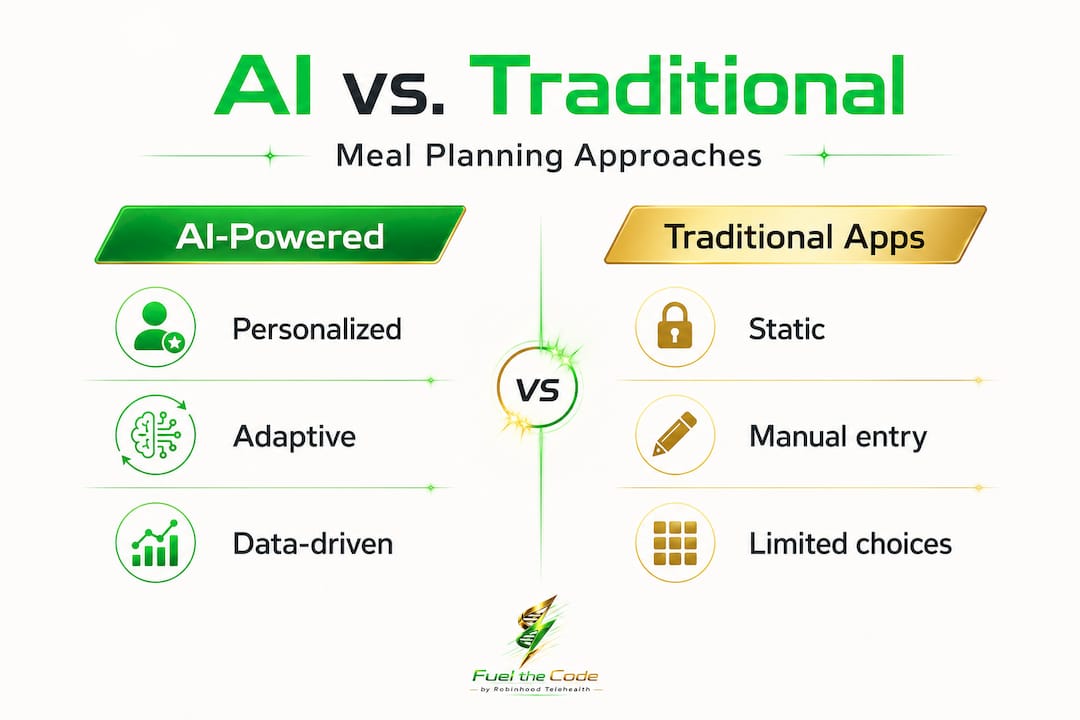
What separates AI-driven tools from older meal planning apps is adaptability. Traditional apps give you a static library. AI tools rebuild your plan on the fly when your inputs change. Swap your rest day for a training session, and your calorie and carbohydrate targets shift automatically.
Pro Tip: Before you start, write down your top three non-negotiables. Whether that's hitting a specific protein target, avoiding a food allergen, or keeping meal prep under 30 minutes on weekdays, feeding the AI clear priorities produces dramatically better results than vague inputs.
How does AI meal planning personalize your nutrition?
With the foundation in place, it's time to explore what happens behind the scenes: How does AI actually understand food and adapt it to your preferences?

The personalization engine behind most AI meal planners relies on two core pillars: nutrition databases and ingredient decomposition. AI meal planning commonly relies on nutrition databases and decomposition of complex and compound foods to improve nutritional analysis and personalization accuracy. In plain terms, the system needs to know not just that you're eating lasagna, but exactly what's in that lasagna: pasta, ricotta, mozzarella, ground beef, tomato sauce, and olive oil, each with its own calorie, protein, fat, and micronutrient profile.
This decomposition process matters more than most users realize. A single compound dish can contain a dozen ingredients, each with variable quantities. If the AI estimates your lasagna portion incorrectly or misidentifies an ingredient, your daily protein count could be off by 20 grams or more. That's a meaningful error for anyone tracking macros seriously.
Here's a snapshot of the data inputs that drive personalization in most AI meal planning systems:
- Body metrics: weight, height, age, and biological sex for baseline calorie calculation
- Activity level: sedentary, lightly active, moderately active, or highly active classifications
- Fitness goals: fat loss, muscle gain, maintenance, or performance optimization
- Diet type: omnivore, vegetarian, vegan, paleo, ketogenic, gluten-free, and others
- Food allergies and intolerances: ingredient-level exclusions applied across all recipes
- Budget parameters: cost-per-serving targets that influence ingredient selection
- Schedule constraints: cooking time available per day, meal frequency preferences, and batch cooking preferences
- Taste preferences: cuisine types, flavor profiles, and disliked ingredients
The more accurate and specific your inputs, the better the output. An AI system working with vague data will produce a generic plan. Feed it precise numbers and clear constraints, and the personalization becomes genuinely useful.
| Personalization factor | Impact on plan output |
|---|---|
| Calorie target | Adjusts portion sizes across all meals |
| Macro ratio | Shifts ingredient ratios (e.g., more protein sources) |
| Allergy filters | Removes flagged ingredients at recipe level |
| Budget cap | Prioritizes lower-cost protein and produce |
| Schedule constraints | Assigns quick-prep meals to busy days |
| Diet type | Filters recipe database to compliant options |
Benefits and limits: Where AI meal planning excels (and where it doesn't)
Now that you understand how AI tries to personalize your plan, it's crucial to look at both sides: where these tools work well and where caution is needed.
AI meal planning genuinely shines in several areas. For busy individuals juggling training, work, and life, the time savings alone are significant. Instead of manually calculating macros for every meal and building a grocery list from scratch, you get a full week's plan in minutes. The diversity of recipes also tends to be higher than what most people generate on their own, which reduces diet fatigue and improves adherence over time.
For beginners, AI tools provide structure that would otherwise require working with a nutrition coach. They answer the "what do I eat today?" question with specificity, which removes decision fatigue and keeps people on track.
| User goal | AI meal planning strength | Key limitation |
|---|---|---|
| General healthy eating | High: fast, diverse, easy to follow | May not optimize micronutrients |
| Fat loss | Moderate: good calorie control | Portion estimation errors possible |
| Muscle building | Moderate: protein targets manageable | Needs accurate body metrics input |
| Medical or clinical diets | Low: not a substitute for clinical care | Risk of meaningful nutritional deviation |
| Athletic performance | Moderate to high: macro customization | Requires validated inputs and review |
| Allergy management | Moderate: filters work at ingredient level | Plans still need manual verification |
That said, the limitations are real and worth taking seriously. AI-generated diet plans can deviate meaningfully from target nutrition, especially for energy and nutrient adequacy in more specific populations such as adolescents, and should not be treated as a substitute for professional dietitian supervision in clinical contexts. For anyone managing a medical condition, eating disorder recovery, or pediatric nutrition, AI tools are a supplement to professional guidance, not a replacement.
The mental and physical connection between meal preparation and wellness is also worth factoring in. Cooking your own food, even from an AI-generated plan, builds a relationship with food that supports long-term habit change in ways that meal delivery services alone cannot replicate.
Pro Tip: If you have a diagnosed medical condition, chronic food allergies, or are following a therapeutic diet, always run your AI-generated plan past a registered dietitian or your clinician before committing to it. The convenience is real, but so is the risk of silent errors in complex cases.
Real-world use cases: Optimizing performance, wellness, and healthy habits
Having examined strengths and weaknesses, let's put theory into practice: How can health-conscious individuals use AI meal planning for real results in everyday life?
The three most practical applications for performance-focused users are meal prep optimization for busy schedules, macro fine-tuning for athletic performance, and building sustainable nutrition habits over time.
Here's how to integrate AI meal planning into your daily workflow effectively:
- Set your inputs with precision. Enter your exact body weight, current training volume, and specific macro targets. Vague inputs produce vague plans. If you're in a caloric surplus for muscle building, specify the exact surplus (e.g., 300 calories above maintenance), not just "gain muscle."
- Generate your weekly plan and review it before accepting. Scan for any ingredient flags, unusual portion sizes, or meals that don't fit your cooking reality. AI tools can suggest recipes that technically hit your macros but require 90 minutes of prep on a Tuesday night.
- Use the grocery list feature to batch shop once. Most AI planners consolidate ingredients across the week. Use this to do one large shop rather than multiple trips, which saves time and reduces the temptation to deviate from the plan.
- Log your actual intake and compare it to the plan. This is where most users drop the ball. The plan is a starting point. What you actually eat determines your results. Consistent logging reveals gaps between the AI's estimates and your real-world intake.
- Adjust weekly based on results. If you're not hitting your performance targets after two to three weeks, revisit your inputs. Your activity level may have changed, or your calorie target may need recalibrating.
- Use photo-based logging with caution. Many AI platforms now allow food photo logging for portion estimation. Portion size estimation from images can vary meaningfully by food type and portion size, and using targeted digital atlases or better estimation aids can improve accuracy. In practical terms, weigh your food when precision matters.
"For anyone with strict nutrition targets, whether you're cutting for a competition, managing a metabolic condition, or optimizing recovery, a validated plan is not optional. AI-generated plans are starting points. Your results depend on how accurately you log, how carefully you review, and whether a qualified clinician has signed off on your approach."
The pitfall most performance-focused users hit is over-trusting the AI's portion estimates for mixed dishes. A chicken stir-fry logged as "one serving" can vary by 200 to 400 calories depending on oil quantity, sauce volume, and actual protein weight. Digital food atlases and kitchen scales close this gap significantly.
AI meal planning: What most people get wrong (and how to get it right)
With these applications in mind, here's the hard-earned truth that most guides miss: what you really need to know to use AI meal planning wisely.
The biggest misconception is treating an AI-generated meal plan as a finished product. It isn't. It's a sophisticated draft. The quality of what comes out depends entirely on the quality of what goes in, and on your willingness to verify the output before you commit to it.
We see this pattern repeatedly: someone inputs rough estimates of their activity level and calorie needs, accepts the plan without reviewing it, and then wonders why their body composition isn't changing after six weeks. The AI did its job. The inputs were the problem.
The second most common mistake is ignoring portion accuracy downstream. The plan might be perfectly calibrated, but if you're eyeballing your chicken breast instead of weighing it, you're introducing errors that compound daily. AI meal plans are drafts to be validated, especially if you have allergies, medical conditions, or strict targets, because validated performance depends on both the meal-planning algorithm and the accuracy of upstream food and portion logging. That's not a technicality. That's the mechanism by which plans succeed or fail.
Here's the mindset shift that actually works: treat AI as a smart assistant with access to a massive nutrition database, not as an authority. It can generate options faster than any human, cross-reference thousands of ingredient combinations, and adapt your plan in seconds. What it cannot do is verify that your inputs are accurate, catch every edge case in a complex medical diet, or account for the nuances of your individual metabolism.
Use AI to handle the heavy lifting of plan generation. Use your own judgment, and ideally a clinician's review, to validate the output. That combination is where the real value lives.
Pro Tip: Revisit your AI meal plan inputs every four to six weeks, or any time your training volume, body weight, or health status changes meaningfully. A plan built for your off-season training load is not the right plan for your competition prep phase.
Ready to take charge of your nutrition? AI-powered wellness tools from Robinhood Telehealth
Armed with a practical strategy for using AI meal planning, here's how you can take your nutrition, wellness, and performance to the next level.
At Robinhood Telehealth, we combine AI-driven meal planning with genetic testing, methylation analysis, clinician-guided peptide protocols, and personalized supplement stacks to build nutrition and performance strategies that go well beyond what any standalone meal planning app can offer. Our approach is medically supervised, data-driven, and built around your biology, not a generic template.
If you're ready to move from AI-generated drafts to a fully validated, clinician-reviewed nutrition and performance strategy, explore our premium health solutions. Whether your goal is metabolic optimization, body composition, recovery, or long-term longevity, our team of licensed practitioners is equipped to build a protocol that actually fits your life, your labs, and your goals.
Frequently asked questions
How accurate is AI meal planning compared to a dietitian's plan?
AI meal planning is highly convenient but may deviate from targets for specific populations and complex diets, which is why human clinical oversight remains important for anyone with strict nutritional needs.
Does AI meal planning work for strict diets or allergies?
AI meal planners include allergy and diet filters, but plans must be validated carefully before following them, especially when safety margins are tight or medical conditions are involved.
What data does AI meal planning need from users?
AI meal planning tools typically require dietary preferences, health goals, allergies, budget, and schedule to generate a personalized plan, and more precise inputs consistently produce better results.
Can AI meal planning help optimize athletic performance?
Yes, AI meal planning can support performance nutrition with customized macro targets, but portion accuracy and validated inputs are critical factors in whether the plan actually delivers results for competitive or performance-focused athletes.