

Peptides are everywhere in the wellness world right now. Clinics pitch them for fat loss, athletes use them for recovery, and skincare brands plaster the word on every serum they sell. But explaining peptide benefits honestly means separating the molecules that have decades of clinical data behind them from the ones riding a wave of social media hype. Not all peptides are equal, not all claims are supported, and understanding the difference is what actually helps you make smart decisions about your health.
Table of Contents
- Key takeaways
- What peptides are and how they work in the body
- Scientifically supported peptide benefits
- Understanding the three peptide categories
- Wellness peptides: claims vs. evidence
- How to evaluate peptide benefits for your own goals
- My honest take on the peptide hype
- How Robinhoodtelehealth supports your peptide protocol
- FAQ
Key takeaways
| Point | Details |
|---|---|
| Peptides are signaling molecules | Short amino acid chains direct specific biological responses like hormone release, tissue repair, and immune activity. |
| FDA-approved peptides have real data | GLP-1 agonists like semaglutide and tirzepatide have robust human trial evidence for metabolic health and weight loss. |
| Wellness peptides lack human trial data | Popular peptides like BPC-157 have mainly animal studies behind them, with contamination and dosing risks. |
| Three categories carry different risk levels | FDA-approved drugs, compounded peptides, and gray-market products differ drastically in safety and evidence quality. |
| Clinician oversight is non-negotiable | Dosing errors, stacking risks, and unregulated sources make professional guidance the only responsible path forward. |
What peptides are and how they work in the body
A peptide is simply a short chain of amino acids, the same building blocks that form proteins. The key distinction is length: peptides are typically fewer than 50 amino acids, while proteins are longer. That size difference matters because shorter chains are absorbed and processed differently, and many peptides function as biological signals rather than structural components.
Your body already produces hundreds of peptides naturally. Insulin is a peptide. So is glucagon-like peptide-1 (GLP-1), which signals satiety after meals. Thymosin, which plays a role in immune function, is a peptide. These molecules work by binding to specific receptors on cells and triggering precise responses, whether that means releasing a hormone, initiating tissue repair, or modulating inflammation.
Synthetic peptides are designed to mimic, amplify, or modify these natural signals. Some are exact replicas of endogenous peptides. Others are engineered analogs that last longer in the bloodstream or bind more strongly to target receptors. Understanding this design logic is foundational to understanding peptide function and why the category spans everything from life-saving diabetes drugs to speculative anti-aging compounds.
- Hormone regulation: Peptides like GLP-1 and insulin control blood sugar and metabolism directly.
- Tissue repair: Some peptides stimulate growth hormone release or support cellular recovery processes.
- Immune modulation: Peptides such as thymosin alpha-1 are studied for their role in immune system calibration.
- Skin structure: Collagen-stimulating peptides signal fibroblasts to produce more collagen, supporting skin firmness.
Pro Tip: When you see a peptide marketed for a specific benefit, ask one question first: does the mechanism work in human tissue, or only in cell cultures and rodents? That single question filters out roughly half the wellness market.
Scientifically supported peptide benefits
The clearest case for peptide health benefits comes from the pharmaceutical world. GLP-1 receptor agonists like semaglutide and tirzepatide have been studied in 127 randomized controlled trials covering nearly 59,000 participants. The results show significant, sustained weight loss alongside measurable metabolic improvements including reduced blood sugar, lower blood pressure, and improved lipid profiles. These are not theoretical benefits. They are documented outcomes with known side effect profiles.

Here is a practical comparison of the evidence landscape across common peptide use cases:
| Peptide or category | Primary use claim | Evidence level | Regulatory status |
|---|---|---|---|
| Semaglutide / tirzepatide | Weight loss, metabolic health | High (large RCTs) | FDA-approved |
| Insulin | Blood glucose control | Very high (decades of data) | FDA-approved |
| CJC-1295 / ipamorelin | Growth hormone release | Low (animal, small trials) | Not approved |
| BPC-157 | Tissue repair, gut healing | Very low (mainly animal) | Not approved |
| Collagen peptides | Skin elasticity, joint support | Moderate (limited human trials) | Not regulated as drugs |
For muscle growth and physical recovery, the picture is more nuanced. Animal and lab studies suggest several peptides activate relevant biological pathways for tissue repair and growth hormone release. Physicians acknowledge these mechanisms are plausible, but current evidence falls short of confirming broad real-world benefit in humans. Cautious optimism is the honest position, not confident endorsement.
Pro Tip: The phrase "peptides for muscle growth" covers two very different things: FDA-regulated anabolic peptides studied in clinical contexts, and unregulated gray-market products. Know which one you are actually discussing before drawing conclusions.
Understanding the three peptide categories
Peptide therapies fall into three distinct categories, each with a completely different risk and evidence profile. Conflating them is one of the most common mistakes people make when evaluating peptide advantages.
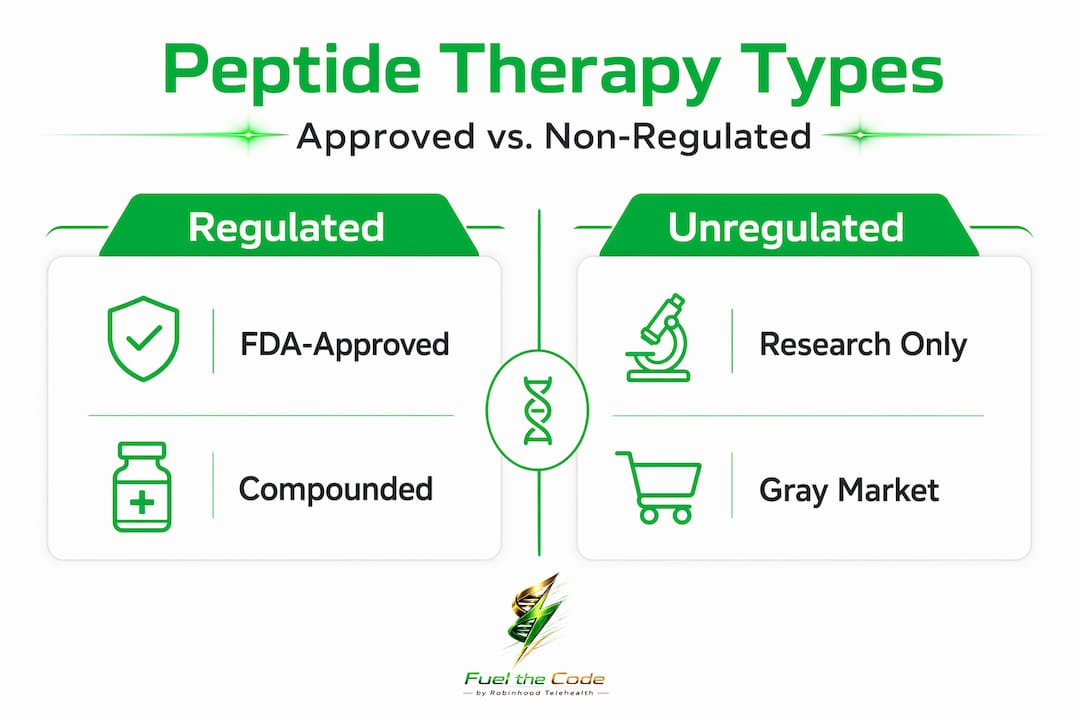
FDA-approved peptide drugs are manufactured under strict quality controls. Dosing has been established through phase trials. Safety data exists for both short-term and long-term use. The AMA notes that these drugs have clear efficacy guidelines that compounded and gray-market products simply cannot match. When your doctor prescribes a GLP-1 agonist, you are getting a product with verified purity and documented outcomes.
Compounded peptides occupy a middle ground. A licensed compounding pharmacy prepares these under physician supervision for specific clinical needs, often when a commercial product is unavailable or a patient requires a modified dose. With proper clinician oversight, compounded peptides can be appropriate. Without it, the same formulation becomes significantly riskier.
Gray-market and research-use-only peptides are where things get genuinely dangerous. These products are sold online, often labeled "for research purposes only," and lack any manufacturing oversight. Some tested samples have contained arsenic and lead at levels exceeding toxicity thresholds. Dosing is guesswork. Contamination is a real risk, not a hypothetical one.
Wellness peptides: claims vs. evidence
BPC-157 and TB-500 are two of the most talked-about peptides in the athletic and longevity communities. Both are promoted for accelerated tissue repair, reduced inflammation, and improved recovery. Both are also largely unsupported by human clinical trial data.
Here is what the evidence actually shows for commonly marketed wellness peptides:
- BPC-157: Studied extensively in rodents with promising results for gut healing and tendon repair. No Phase 1 human safety trials have been completed and published, meaning we do not yet know what a safe human dose looks like.
- TB-500 (Thymosin Beta-4): Animal data suggests roles in angiogenesis and tissue repair. Human efficacy data is absent from the published literature.
- Collagen peptides: More modest claims, but some controlled trials support minor improvements in skin elasticity and joint discomfort with regular oral supplementation.
- Ipamorelin and CJC-1295: Growth hormone secretagogues with small-scale human studies, but none at the scale required to confirm broad performance benefits or rule out long-term hormonal side effects.
The peptide market moves faster than clinical evidence, creating a gap that places real risk on consumers who assume marketed products are validated. Additionally, supplements including peptide products do not require rigorous safety or efficacy trials before they reach store shelves, which means the burden of critical evaluation falls entirely on you. Exploring a trusted resource on peptides for recovery can help you calibrate which claims deserve serious attention.
How to evaluate peptide benefits for your own goals
Making a smart decision about peptides requires more than reading a product description. It requires asking the right questions before you start anything.
- Is there human trial data? Animal studies generate hypotheses. Only controlled human trials confirm benefits. Ask for published studies, not brand-sponsored white papers.
- What is the regulatory status? FDA-approved means verified purity and established dosing. Anything else requires more scrutiny, not less.
- Who is guiding the protocol? A licensed clinician who understands your labs, history, and goals is not optional. It is the minimum standard for responsible use.
- What are the known side effects? Even well-studied GLP-1 agonists cause nausea and gastrointestinal discomfort in a meaningful percentage of users. Less-studied peptides may carry risks that simply have not been documented yet.
- Are you stacking? Combining multiple peptides compounds the uncertainty exponentially. Scientific protocols for peptide combinations barely exist, and anecdotal reports are not a substitute.
Pro Tip: Before starting any peptide protocol, pull your baseline labs, including fasting glucose, IGF-1, and a comprehensive metabolic panel. These give you objective data to compare against after a few months, so you can measure whether the protocol is actually working for you.
Following safe use guidelines and working with a qualified clinician are the two practices that separate informed users from those who learn about risks the hard way.
My honest take on the peptide hype
I have watched the peptide space evolve over the past decade, and the pattern is consistent: enthusiasm always outpaces the science. I do not say that to dismiss the category. I say it because I have also seen what FDA-approved GLP-1 therapy can do for someone with metabolic dysfunction. The results are real, measurable, and life-changing for the right patient. The science there is solid.
What concerns me is the easy conflation of those documented benefits with claims made for compounds that have never been tested in humans under controlled conditions. When someone tells me they are injecting a gray-market peptide because "it worked for a guy on a podcast," I hear someone taking on real biological risk based on anecdote. That is not cautious optimism. That is wishful thinking with a syringe.
My position is this: the peptide advantages that deserve your attention are the ones tied to actual human data or delivered through a clinician-supervised protocol using regulated sources. Everything else should be treated as experimental, because that is precisely what it is. The science is moving fast, and some of today's experimental compounds may have strong evidence behind them within five years. But "may have evidence soon" is not the same as "safe and effective now."
Stay curious, stay skeptical, and work with a clinician who will be honest with you about what the data actually says.
— G
How Robinhoodtelehealth supports your peptide protocol

If you want to experience the actual benefits of peptides rather than gamble on unregulated products, the starting point is clinical oversight. Robinhoodtelehealth builds personalized peptide protocols grounded in your specific labs, health history, and performance goals, not a generic one-size-fits-all template. Their clinician-guided peptide protocols include access to FDA-approved therapies like GLP-1 agonists, with transparent dosing and ongoing monitoring built into every plan.
Beyond peptides, Robinhoodtelehealth pairs its clinical programs with DNA-based performance profiling to identify how your unique biology responds to specific compounds, training demands, and nutritional strategies. This level of personalization is what separates a protocol that actually works from one that merely sounds good in a marketing email. You deserve precise answers about what will work for your body, and that starts with a proper clinical evaluation.
FAQ
What are the main benefits of peptides?
The most evidence-backed peptide health benefits come from FDA-approved compounds like GLP-1 receptor agonists, which support significant weight loss and metabolic health. Other potential benefits in skin, recovery, and hormone support exist but are largely supported by early-stage or animal research.
How do peptides help with weight loss?
GLP-1 agonists like semaglutide and tirzepatide signal satiety and regulate blood sugar, producing documented weight loss. Clinical trial data from nearly 59,000 participants confirms these effects across multiple large randomized trials.
Are wellness peptides like BPC-157 safe?
BPC-157 has not completed published Phase 1 human safety trials, so its safety profile in humans is genuinely unknown. Gray-market versions carry additional risks including contamination with heavy metals, making clinician consultation before use a hard requirement.
What is the difference between compounded and FDA-approved peptides?
FDA-approved peptide drugs have verified manufacturing quality, established dosing, and documented safety data. Compounded peptides are clinician-prepared for specific patients but lack the same regulatory oversight, while gray-market peptides have no oversight at all.
Should I consult a doctor before using peptides?
Yes. Multiple expert bodies, including the AMA, recommend professional guidance before starting any peptide therapy due to dosing complexity, contamination risks, and patient-specific variables that no online product description can address.