

Most people don't fail at healthy eating because they lack willpower. They fail because they stand in front of an open refrigerator at 6 p.m. with no plan, no prepped ingredients, and a delivery app one tap away. The meal planning process for health solves this at the root. It removes the daily decision fatigue that makes poor food choices feel easier than good ones. This guide walks you through a realistic, flexible system for planning and prepping meals that actually supports your nutrition goals, without requiring a culinary degree or a perfectly curated Instagram kitchen.
Table of Contents
- Key takeaways
- The meal planning process for health starts here
- Step-by-step: planning and prepping a healthy week
- Common pitfalls and how to avoid them
- Using technology to sharpen your strategy
- Benefits you can actually measure
- My honest take on building this habit
- Take your nutrition further with Robinhoodtelehealth
- FAQ
Key takeaways
| Point | Details |
|---|---|
| Flexibility beats perfection | Sustainable healthy eating depends on consistent patterns, not flawless execution every single day. |
| Templates over rigid recipes | Using a protein + plant + grain template prevents boredom and keeps prep simple. |
| Batch components, not full meals | Prepping versatile ingredients gives you variety throughout the week without extra cooking. |
| One hour saves your whole week | A single prep session on Sunday can cover 12 or more meals with only 5 to 10 minutes of daily assembly. |
| Technology personalizes the process | AI-driven tools and health data make it easier to tailor nutrition plans to your specific goals. |
The meal planning process for health starts here
Before you shop or chop a single vegetable, you need the right foundation. Most people skip this step and wonder why their meal prep fizzles out after two weeks.
Tools and storage you actually need
You do not need a professional kitchen. What you do need:
- Glass or BPA-free plastic containers in multiple sizes for portioning proteins, grains, and vegetables separately
- A sheet pan and a large skillet for batch roasting and cooking
- A sharp chef's knife and cutting board to make prep fast and safe
- Measuring cups and a kitchen scale for portion accuracy, especially when tracking macros
A grocery list template or app rounds this out. Strategic grocery planning is one of the most overlooked tools in the process, and it directly reduces both food waste and impulse spending.
Nutritional basics worth knowing
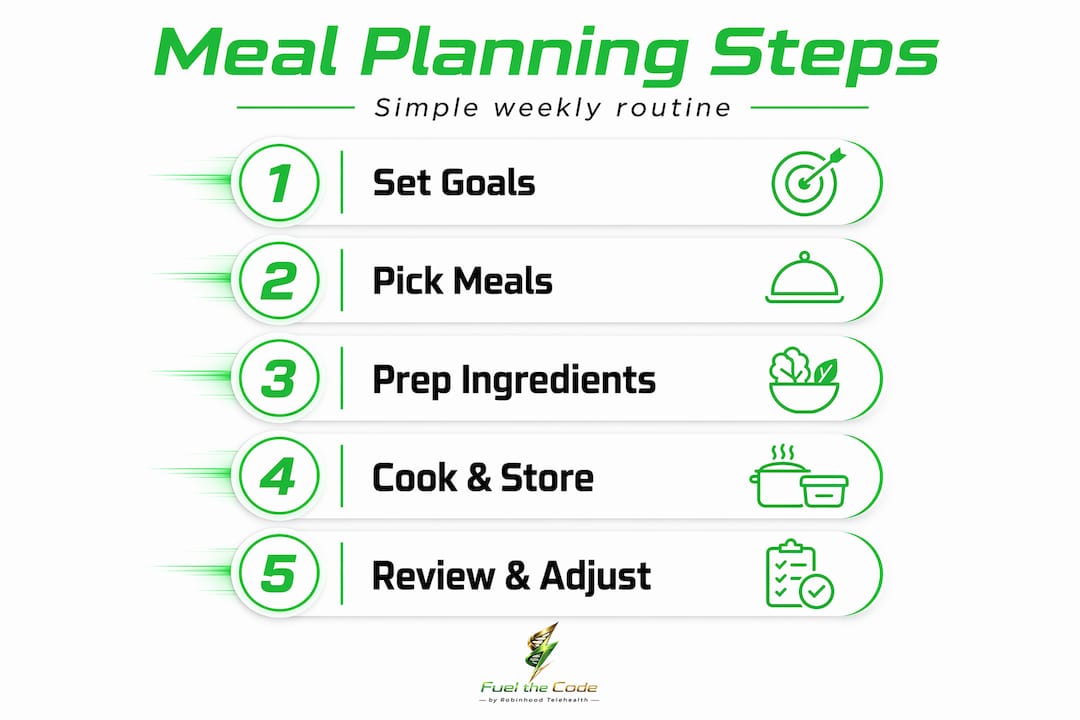
You do not need to count every calorie. You do need a rough framework. A solid healthy meal plan targets at least 60 grams of protein and 30 grams of fiber daily, within a range of 1,500 to 2,000 calories for most adults pursuing weight management or general wellness.
| Nutrient | Daily target | Why it matters |
|---|---|---|
| Protein | 60+ grams | Promotes satiety and preserves muscle |
| Fiber | 30+ grams | Supports digestion and blood sugar balance |
| Calories | 1,500 to 2,000 | Fuels activity without excess |
| Vegetables | 50% of plate | Nutrient density with low calorie cost |
Pro Tip: Don't try to overhaul your diet in week one. Pick three meals to prep and build the habit before you expand. Sustainability beats intensity every time.
Step-by-step: planning and prepping a healthy week
This is the core of the process. Follow this sequence and you will cut daily cooking down to near zero.
-
Schedule your planning session. Block 20 minutes on Friday or Saturday to review the coming week. Check your calendar for meals out, busy nights, or social events that affect what you actually need.
-
Take stock of what you already have. Open your pantry and fridge. Write down proteins, grains, and produce already on hand. This one habit alone can cut grocery spending by 20 to 30 percent and eliminates the frustrating "I already have that" moment at the store.
-
Choose meals using the template approach. Build each meal around one protein source, one or two plants, and one grain or fat. For example: grilled chicken (protein) + roasted broccoli and peppers (plants) + brown rice (grain). Templates prevent boredom and require far less mental energy than selecting a new recipe every night.
-
Build your shopping list by category. Organize your list into produce, proteins, grains, frozen, and pantry staples. This speeds up shopping and prevents backtracking across the store. Leave one or two "wildcard" dinner slots open for flexibility.
-
Batch cook components, not full meals. Roast a sheet pan of mixed vegetables. Cook a large batch of quinoa or brown rice. Grill or bake several chicken breasts or portions of salmon. Batch cooking versatile staples that combine differently throughout the week eliminates meal fatigue far better than making seven identical containers of the same dish.
-
Store everything properly. Allow cooked food to cool before sealing containers. Proper cooling before storing prevents bacterial growth that ruins food texture and safety. Use airtight containers and label them with dates. Most prepped meals stay fresh for three to four days in the refrigerator, and many proteins and grains freeze well for up to three months.
Pro Tip: Cook grains in low-sodium broth instead of water. It adds flavor without adding sodium-heavy sauces later, which keeps your meals clean and satisfying.
Common pitfalls and how to avoid them
Even people with good intentions run into the same wall. Knowing what typically goes wrong makes it much easier to stay on track.
- Overplanning for the week. Prepping 21 meals for your first week almost guarantees burnout and food waste. Start with lunch and dinner for four days. That is already a significant win.
- Rigid recipe following. Following a new complex recipe every week adds prep time and mental strain. When you use a template instead of a recipe, you can swap ingredients based on what is on sale or what sounds good without starting over from scratch.
- Ignoring portion awareness. You do not need a food scale forever, but for the first few weeks, using the plate method is useful. Fill 50 percent of your plate with vegetables, 25 percent with protein, and 25 percent with whole grains. It is a visual check that requires no math.
- Skipping adjustment. The best meal planners treat week one as a draft. If a recipe was too time-consuming or a food went uneaten, they note it and adjust for week two. Treating your plan as static is where most people get stuck.
- Zero flexibility for social eating. Healthy meal planning is not house arrest. Build in one or two nights of flexibility per week. Eating out with friends or ordering pizza on a Friday does not undo the progress from five well-planned days.
"The biggest predictor of healthy eating success is having nutritious food ready and within reach. Make the good choice the easy choice, and most of the battle is already won."
Using technology to sharpen your strategy
The tools available in 2026 make personalized healthy meal planning easier than it has ever been. You do not need to figure out your ideal macros by hand or spend an hour finding recipes that match your dietary restrictions.
The AI meal planning market is projected to reach $2.45 billion by 2030, growing at a 24.1 percent annual rate. That growth is being driven by one thing: people want plans that actually fit their lives, not generic templates built for a fictional average person.
Here is how to use technology without getting overwhelmed:
- AI-driven apps can generate weekly meal plans based on your dietary preferences, calorie targets, and even food dislikes. They remove the weekly decision work almost entirely.
- Automated grocery lists sync directly with your meal plan, so your shopping list builds itself once you confirm your meals for the week.
- Health data integration is where things get genuinely interesting. Platforms that factor in your metabolic health, activity level, or genetic predispositions can produce highly personalized nutrition plans with meaningfully better adherence than one-size-fits-all approaches.
- Logging speed matters. With pre-portioned meals, you can log an entire day's nutrition in under two minutes. That kind of frictionless tracking is what makes data-driven eating actually sustainable.
For athletes and performance-focused individuals, integrating meal timing with training schedules adds another layer of precision. The concept of fueling smarter extends beyond what you eat to when and how you structure recovery nutrition.
Benefits you can actually measure
Switching to a consistent meal prep for wellness routine produces changes you can track, not just feel.
- Time savings. A structured weekend prep session takes about 60 minutes and replaces 30 to 45 minutes of nightly cooking. Over a week, that reclaims two to three hours.
- Better nutritional intake. When meals are planned in advance, hitting your protein and fiber targets becomes a deliberate act rather than an accidental one.
- Fewer impulsive food decisions. When healthy food is portioned and ready, the path of least resistance becomes the salad or the prepped grain bowl, not the drive-through.
- Improved energy and digestion. Within two to three weeks of consistent whole-food eating, most people report steadier afternoon energy and better digestion.
- Clearer tracking. Pre-portioned meals mean nutrition logging takes seconds, not minutes.
Pro Tip: Take a photo of your prep at the end of each Sunday session. Looking back at even two weeks of consistency is one of the most motivating things you can do when your habit feels shaky.
My honest take on building this habit
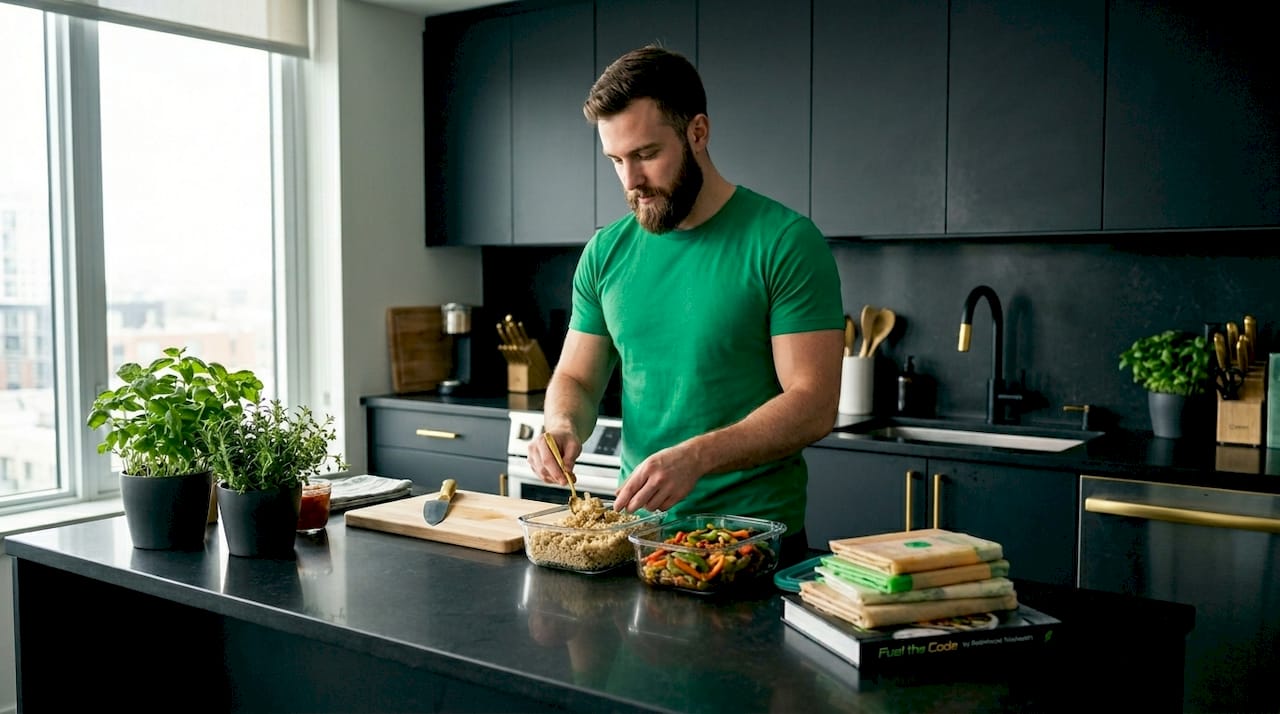
I've seen a lot of people sprint into meal prep with color-coded containers and a 47-step Sunday routine, and I've watched most of them quit within a month. What I've found over time is that the people who stick with it are almost always doing less, not more.
The best meal planners I know eat some version of the same five or six meals on rotation. Not because they lack creativity. Because they understand that consistency builds results, not novelty. Healthy eating depends on consistent patterns over weeks, not a perfect single day.
My take on technology is straightforward too. The best AI or app in the world cannot substitute for knowing your own preferences and schedule. Use these tools to reduce friction and remove repetitive decision-making. Don't use them to build a plan so complicated that missing one day feels like the whole system has collapsed.
The most underrated meal planning tip I can offer? Pick two or three proteins, two grains, and five vegetables you genuinely enjoy. Build every week from that list. The variety comes from how you season and combine them, not from reinventing your pantry. That simple constraint is what makes a personalized meal plan sustainable for months instead of weeks.
Start small. Be flexible. Make the healthy option the convenient one.
— G
Take your nutrition further with Robinhoodtelehealth
If you have gotten this far, you are serious about making healthy eating a real part of your life. Robinhoodtelehealth is built for exactly that.
The Robinhoodtelehealth meal planning app on the Wellness Hub generates personalized weekly meal plans based on your dietary preferences, calorie targets, and wellness goals. It builds your grocery list automatically and adapts as your needs change. For those who want to go deeper, Robinhoodtelehealth offers DNA-based genetic testing to reveal how your body processes nutrients, responds to different macronutrient ratios, and performs under different training conditions. Pair that with methylation testing and clinician-guided peptide and metabolic protocols and you move from general healthy eating into precision wellness. Your food choices become decisions backed by your own biology.
FAQ
What is the meal planning process for health?
The meal planning process for health involves setting nutrition goals, choosing balanced meals in advance, prepping ingredients in batches, and storing food properly to support consistent, nutritious eating throughout the week.
How long does meal prep for wellness actually take?
A focused weekend session typically takes about 60 minutes and covers 12 or more meals, reducing daily cooking to just 5 to 10 minutes of assembly.
What should a healthy weekly meal plan include?
A well-built weekly meal planner targets at least 60 grams of protein and 30 grams of fiber daily, with each plate roughly divided into 50 percent vegetables, 25 percent protein, and 25 percent whole grains.
Can AI really help with meal planning?
Yes. AI-driven meal planning apps personalize plans based on your health data, preferences, and goals, and can generate automatic grocery lists that significantly reduce the time and mental effort involved.
How do I stay consistent with healthy meal planning?
Focus on flexibility over perfection. Use a simple template for meals, keep a regular list of proteins and vegetables you enjoy, and treat your weekly plan as a draft that improves over time rather than a rigid rulebook.