

Most people who want to live longer don't lack motivation. They lack a clear, realistic path forward. If you've spent any time researching how to optimize longevity, you've likely encountered expensive biohacking protocols, conflicting diet advice, and promises that feel more like marketing than medicine. The truth is simpler and more empowering: about 50% of your lifespan is shaped by biology you can't control, but the other half is wide open. This guide focuses on the controllable half, using evidence-based practices to add not just years, but quality years.
Table of Contents
- Key Takeaways
- How to optimize longevity: the foundations first
- Nutrition strategies for healthy aging
- Exercise: the most powerful longevity tool you have
- The social and psychological side of living longer
- Tracking progress and knowing when to get help
- My honest take on what actually moves the needle
- Take your longevity plan to the next level
- FAQ
Key Takeaways
| Point | Details |
|---|---|
| Healthspan over lifespan | Longevity optimization targets quality and function across your years, not just total years lived. |
| Protein matters more after 40 | Aim for 1.0 to 1.2g of protein per kilogram of body weight daily to preserve muscle and metabolic health. |
| Exercise is your best longevity drug | Combining 150 minutes of cardio with two strength sessions weekly can add nearly 7 years to your life expectancy. |
| Social connection outranks supplements | Decades of research confirm that meaningful relationships are among the strongest predictors of a long, healthy life. |
| Consistency compounds over time | Healthy daily habits deliver far greater returns than any single expensive intervention or supplement. |
How to optimize longevity: the foundations first
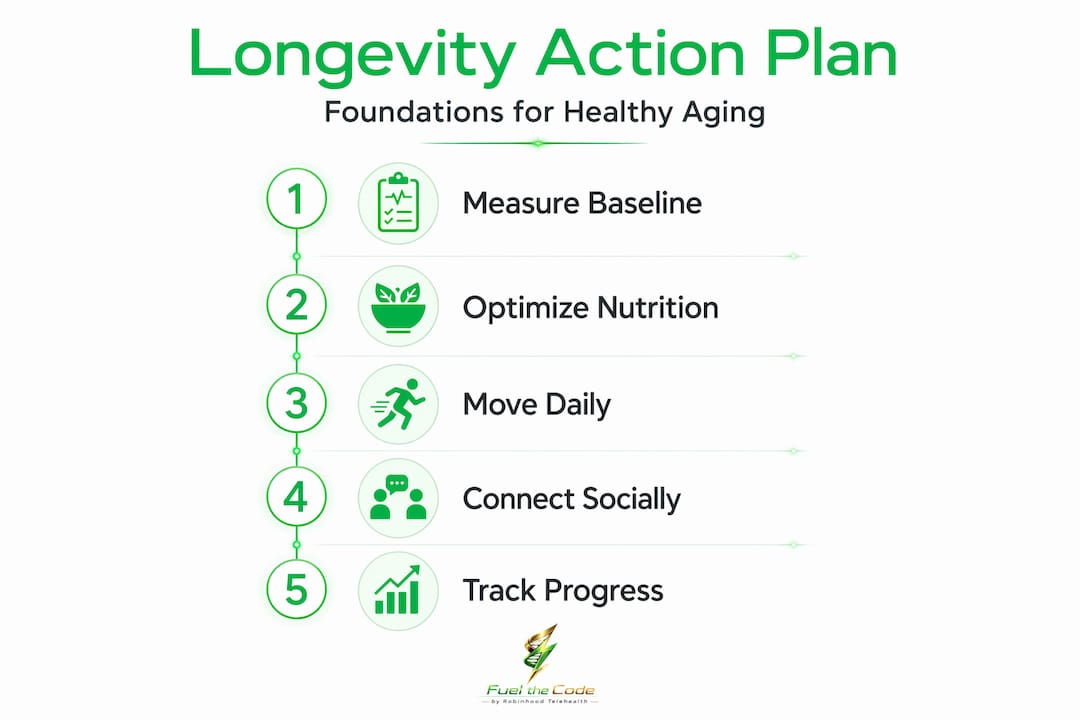
Before you track your VO2max or overhaul your supplement stack, you need to understand what you're actually working toward. Longevity optimization is about compressing morbidity, which means spending more years in good health and fewer years in decline. The goal isn't a magic number. It's preserving your independence, cognitive sharpness, and physical function for as long as possible.
Two terms worth distinguishing: lifespan is how long you live, while healthspan is how well you live during that time. Most people, if asked honestly, care far more about the second one. No one wants to add a decade of poor health to their life. This reframe changes your priorities immediately.
The other mindset shift worth making early: consistency in healthy habits beats intensity every time. Longevity benefits accumulate over decades, not weeks. That means sustainable choices win over extreme protocols, every single time.
Here's a quick baseline checklist to assess where you stand today:
- Annual physical with basic bloodwork (lipids, fasting glucose, inflammatory markers)
- Body composition awareness, not just weight
- A consistent sleep schedule averaging 7 to 9 hours per night
- Some form of daily movement, even if informal
- A sense of your current stress load and social connection quality
Think of this as your starting map. You can't improve what you haven't measured, at least roughly.
| Readiness Factor | Why It Matters |
|---|---|
| Baseline bloodwork | Identifies silent metabolic issues before they compound |
| Sleep quality assessment | Poor sleep undermines every other longevity habit |
| Current physical activity level | Determines where to start with exercise progression |
| Stress and mental health | Chronic stress accelerates biological aging |
| Social connection quality | Strong relationships are a primary longevity predictor |
Nutrition strategies for healthy aging
Food is where most people either build or erode their healthspan, one meal at a time. The science has gotten clearer, and a few principles stand above the rest.
Protein is the most underrated longevity nutrient for adults over 40. Adults over 40 should aim for 1.0 to 1.2g of protein per kilogram of body weight daily, with 20 to 30 grams per meal to maximize muscle protein synthesis. For a 160-pound person, that's roughly 73 to 87 grams per day. Most people eating a standard American diet fall short of this. The consequence isn't just muscle loss; it's slower metabolism, reduced strength, and higher fall risk as you age.
Fiber is the second non-negotiable. Daily fiber of 25 to 31 grams from whole foods like broccoli, beans, lentils, and berries supports gut health, controls blood sugar, and reduces cardiovascular disease risk. Most fiber-rich foods provide at least 5 grams per serving, so hitting your target is more achievable than it sounds if you build meals around plants.
Pro Tip: Plan your meals around your protein and fiber targets first, then fill in the rest. Using a tool like Robinhoodtelehealth's personalized meal planning can automate this process entirely, removing the decision fatigue that derails most people.
Beyond macronutrients, the broader dietary pattern matters. Mediterranean-style eating, which emphasizes olive oil, whole grains, fish, legumes, and colorful vegetables, consistently ranks among the best-studied patterns for longevity. Ultra-processed foods and frequent alcohol increase inflammation and mortality risk, which means cutting back on both is one of the highest-return changes most people can make.
A practical approach to building a longevity-focused plate:
- Fill half the plate with vegetables and fruit
- Add a protein source at every meal (eggs, fish, legumes, poultry, Greek yogurt)
- Use whole grains instead of refined carbohydrates
- Cook with olive oil as your primary fat
- Keep alcohol to occasional, not habitual, and skip it entirely if you're optimizing seriously
- Check out the 2026 meal planning checklist for a structured weekly framework
Exercise: the most powerful longevity tool you have
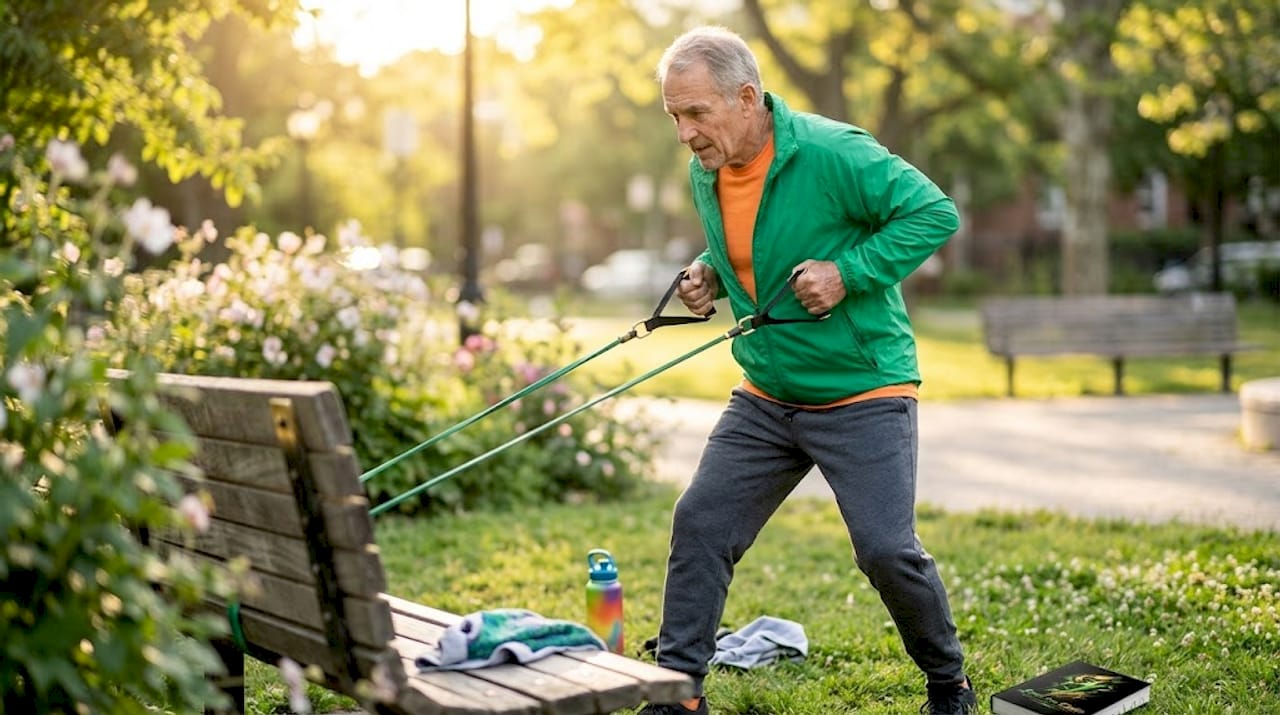
No supplement, peptide, or diagnostic test comes close to matching what consistent exercise does for your lifespan and healthspan. The data on this is unambiguous. 150 minutes of moderate cardio per week plus two strength sessions can extend life expectancy by up to 6.9 years. That's not a marginal gain. That's nearly a decade of additional life from a habit that costs nothing but time.
Here's how to structure your exercise week for maximum longevity benefit:
- Build your aerobic base. Start with brisk walking, cycling, or swimming for 30 minutes most days. Cardiorespiratory fitness, specifically VO2max, is one of the strongest longevity predictors across all ages. If you can hold a conversation but not sing, you're in the right intensity zone.
- Add two strength training sessions. Focus on compound movements: squats, deadlifts, rows, presses, and lunges. Progressive overload and compound movements are the mechanisms behind sustained muscle mass, better metabolic health, and stronger bones into old age.
- Reduce sedentary time. Sitting for 8 to 10 hours a day offsets much of the benefit from structured exercise. Set a timer to stand and move for two to three minutes every hour. Take walking meetings. Park farther away.
- Progress gradually. Injury is the biggest enemy of consistency. Add no more than 10% to volume or intensity per week, and prioritize form over load.
- Track your effort, not just your steps. A fitness tracker can show you heart rate trends, resting heart rate changes, and sleep quality, all of which reflect your improving fitness over months.
Pro Tip: If you're starting from near zero, commit to 10 minutes of movement daily for the first two weeks before adding more. Building the habit comes first. Duration and intensity follow.
The combination of aerobic and resistance training also preserves metabolic flexibility, which is your body's ability to shift between burning carbohydrates and fats efficiently. This matters because metabolic inflexibility underlies many chronic diseases that shorten healthspan. Exercise doesn't just add years; it keeps the years you have fully functional.
The social and psychological side of living longer
Here's the finding that consistently surprises people when they first encounter it. Strong social connections are the primary contributor to healthspan and longevity, confirmed across 80 years of Harvard research. More powerful than diet. More powerful than exercise. Not a replacement for either, but genuinely additive in a way most people underestimate.
Loneliness and social isolation increase mortality risk at rates comparable to smoking 15 cigarettes a day. That figure tends to shock people, and it should. If you're investing in your diet and workout routine but neglecting your relationships, you're leaving your most powerful longevity lever untouched.
What else belongs in this category?
- Stress management. Chronic stress elevates cortisol, drives inflammation, disrupts sleep, and accelerates cognitive decline. Meditation, breathwork, time in nature, or even regular walks without a podcast all count. The practice matters less than the consistency.
- Sleep quality. Sleep is when your brain clears metabolic waste, your muscles repair, and your hormones regulate. Protect it like a non-negotiable appointment.
- Sense of purpose. People with a clear reason to get up in the morning, whether that's work, family, creative projects, or community, consistently outlive those without one. This is not a soft variable. It has measurable biological effects.
- Joy and flexibility. A longevity lifestyle that makes you miserable will not last. Build in occasional pleasures, social meals, and rest days without guilt. Sustainable habits beat perfect habits.
Tracking progress and knowing when to get help
Monitoring your health isn't about becoming obsessed with data. It's about catching problems early, when they're still fixable. Annual bloodwork and age-appropriate screenings are the minimum standard for anyone serious about longevity. For women over 40, that includes mammograms and bone density scans. For men and women over 45 to 50, colonoscopies become relevant.
Beyond annual labs, a few key biometrics tell you a great deal about where you stand:
| Biometric | Target Range | Monitoring Frequency |
|---|---|---|
| Fasting glucose | Under 100 mg/dL | Annually or biannually |
| Blood pressure | Under 120/80 mmHg | Every 6 months or at checkups |
| LDL cholesterol | Under 100 mg/dL (ideal) | Annually |
| hsCRP (inflammation) | Under 1.0 mg/L | Annually |
| Resting heart rate | 50 to 70 bpm (fit adults) | Ongoing via wearable |
Wearable technology, like a smartwatch or fitness ring, provides useful data on sleep, heart rate variability, and activity levels. Use it as a feedback tool, not a source of anxiety. If your data trends consistently in the wrong direction despite lifestyle changes, that's a signal to consult a clinician rather than add another supplement.
My honest take on what actually moves the needle
I've read a lot of the longevity literature, and I've talked with enough people doing this work seriously to have a clear opinion: most of the conversation about longevity has a marketing problem. People gravitate toward expensive tests, exotic protocols, and gadgets because they feel like doing something. They often replace the boring, high-return habits that actually work.
Here's what I've found: the 80-year Harvard study on social connection isn't discussed nearly as much as cryotherapy or NAD infusions, even though its predictive power is far stronger. The reason is obvious. Relationships can't be sold in a bottle.
What I tell anyone who asks is this: get your sleep locked in, eat enough protein, lift weights twice a week, walk daily, and invest in the people around you. Do those things consistently for a year, and your biomarkers will reflect it. You won't need a study to see the difference.
The people overfocused on marginal gains often miss the forest for the trees. If your foundation is solid, then yes, explore peptides for longevity or precision testing. But the foundation has to come first.
— G
Take your longevity plan to the next level
If you've built the lifestyle foundation and you're ready to go deeper, Robinhoodtelehealth offers the tools to personalize what comes next.
DNA-based insights from Robinhoodtelehealth's genetic fitness testing reveal how your body responds to exercise, diet, and recovery, so you stop guessing and start optimizing for your biology specifically. For those looking at biological age, the methylation testing kit measures epigenetic markers to show where your cellular health actually stands. And for metabolic support, muscle maintenance, or hormonal balance, clinician-guided peptide and GLP-1 protocols offer a structured, medically supervised path forward. These aren't shortcuts. They're precision tools that work best when your foundational habits are already in place.
FAQ
What does it mean to optimize longevity?
Optimizing longevity means extending your years of healthy, functional living rather than simply increasing total lifespan. The focus is on compressing the period of decline at the end of life.
How much exercise do you actually need to increase lifespan?
Research shows that 150 minutes of moderate cardio per week combined with two resistance training sessions can extend life expectancy by up to 6.9 years. Consistency matters more than intensity.
What foods best support healthy aging?
High-protein whole foods, fiber-rich vegetables, legumes, and Mediterranean-style meals consistently show the strongest association with better metabolic health and reduced mortality risk.
How do social connections affect longevity?
Over 80 years of Harvard research confirms that joyful, strong social connections are among the most powerful predictors of healthspan. Chronic loneliness carries mortality risks comparable to heavy smoking.
When should I consider advanced longevity testing?
Once your lifestyle foundations are stable, tools like genetic fitness testing or methylation analysis can provide personalized data to refine your strategy. A clinician can help interpret results and guide next steps.